A dripping water heater overflow pipe in Wexford, PA is one of the most common water heater calls we get, especially in older homes and on private wells. It usually isn't a sign your tank is failing. This guide covers why it happens, how to check it safely, and which fixes are reasonable to try yourself before calling a plumber.
What Is the Water Heater Overflow Pipe (and What Does It Do)?
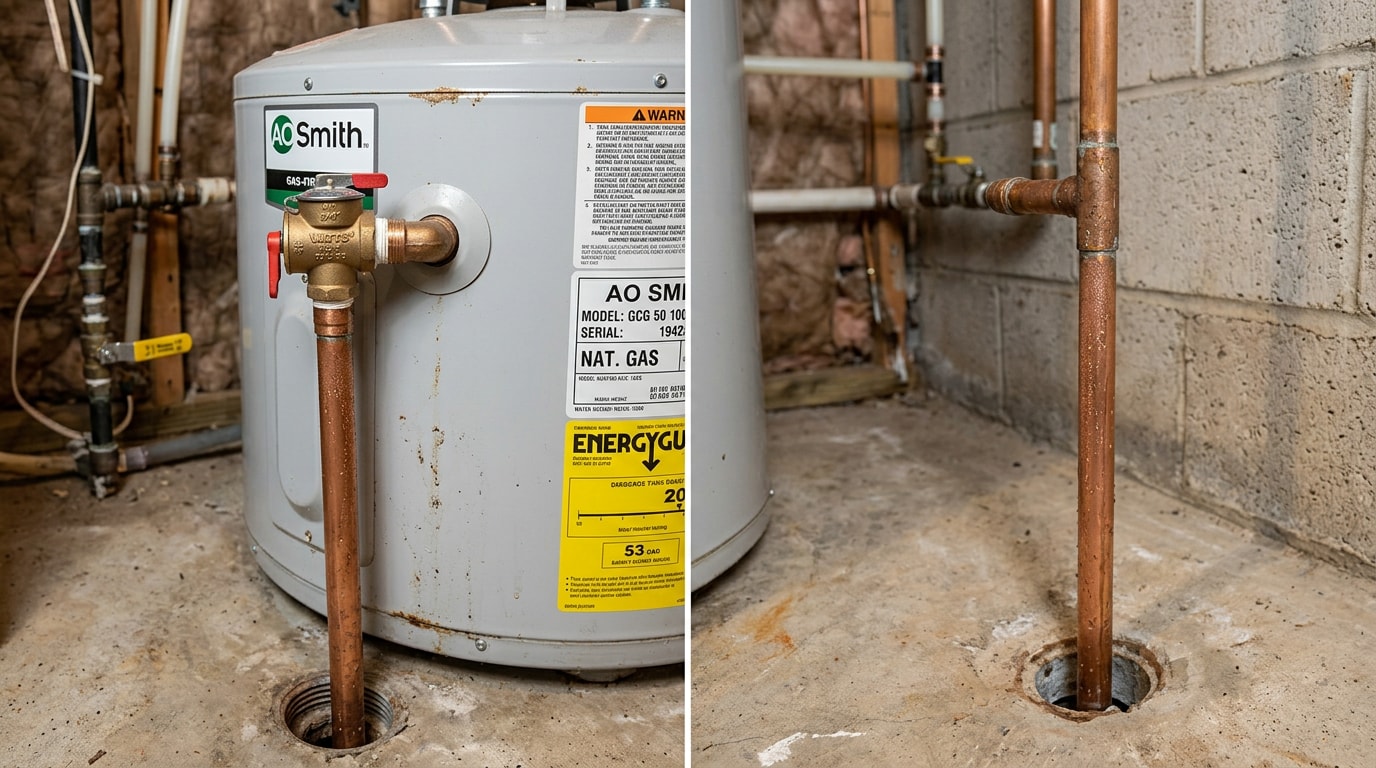
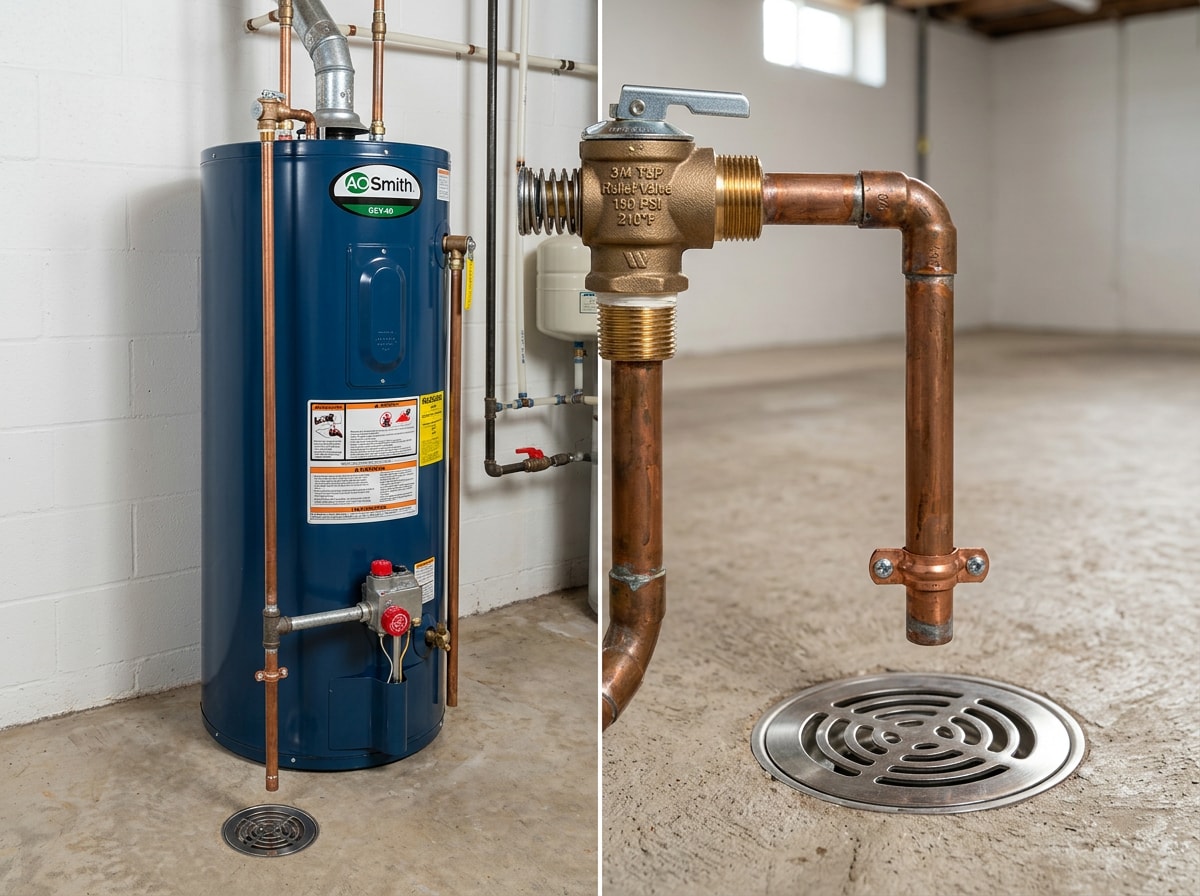
The overflow pipe is the discharge line connected to the temperature and pressure relief valve (T&P valve) mounted on or near the top of the tank.
It's a safety device, not a drain or a design flaw. It exists to release water automatically if pressure or temperature inside the tank climbs to an unsafe level.
The discharge pipe runs from the valve down toward the floor, ending a few inches above a drain or an exterior wall opening. It should never be capped, threaded shut, or run uphill.
Any discharge from this pipe means the valve did its job. The real question is why it opened in the first place.
For a closer look at how this system connects to the rest of your tank, our water heater repair technicians can walk through the full setup during a service visit.
Common Causes of a Water Heater Overflow Pipe Leaking
Nearly every overflow pipe leak traces back to one of four root causes: too much pressure, too much heat, a worn-out valve, or a failed expansion tank. The table below is a quick starting point before you dig into the details.
| What You're Seeing | Likely Cause | Typical Fix |
|---|---|---|
| Dripping only during/after heavy hot water use | Thermal expansion, undersized or missing expansion tank | Install or replace expansion tank |
| Constant slow drip, pressure reads normal | Worn, corroded, or sediment-clogged T&P valve | Replace the T&P valve |
| Static pressure gauge reads above 80 psi | High incoming water pressure (city or well) | Install/adjust a pressure-reducing valve |
| Tap water runs noticeably hotter than 120°F | Thermostat set too high or malfunctioning | Lower setting; replace thermostat if it doesn't respond |
| Leak at the threads, not the open pipe end | Loose fitting or poor installation | Reseal or correct the discharge pipe installation |
High Water Pressure
A water heater overflow pipe often leaks simply because incoming water pressure is too high for the T&P valve to tolerate. Most residential T&P valves are rated to open around 150 psi.
Plumbing code caps static household pressure at 80 psi and requires a pressure-reducing valve above that threshold, so anything near or past that number is already outside normal limits, per the International Plumbing Code's water piping requirements.
When municipal supply pressure spikes, or when a well pump's pressure switch is set too high, tank pressure can creep upward until the valve discharges as a safety release. This isn't a malfunction; it's the valve doing exactly what it's designed to do.
A simple pressure gauge from any hardware store will tell you where your home's static pressure actually sits. In our service calls across Wexford and the surrounding well-water communities, we find pressure switches set well above the 40-60 psi "cut-in" range more often than homeowners expect, especially on systems that haven't been serviced in years.
Faulty or Failing T&P Relief Valve
Sometimes the pipe drips even when pressure and temperature are completely normal. In that case, the valve itself is usually the problem.
Sediment, mineral buildup, or a worn rubber seal can keep the valve from sealing fully after it opens, or let it open at pressures lower than it should. Hard water deposits and general corrosion inside the valve body are the most common culprits over time, which is why T&P valves are considered the "last line of defense" for the tank, according to Watts' technical guide on T&P relief valves.
A relief valve leaking continuously should never just be capped or ignored to stop the drip. That defeats the entire purpose of having one. If a valve looks corroded or won't reseat after a test lift, replacement is the right next step.
Thermal Expansion and an Overheating Tank
Water expands as it heats. In a closed plumbing system, one with a check valve or pressure-reducing valve on the main line, that expanding water has nowhere to go except back out through the T&P valve. This is one of the most overlooked causes of a dripping overflow pipe, and it usually comes down to one of three things.
- Thermostat set too high. If the tank runs hotter than roughly 120°F, water volume expands more than a properly sized system can absorb. The U.S. Department of Energy recommends setting residential water heaters to 120°F for both safety and efficiency.
- Expansion tank has failed. An expansion tank uses an internal air bladder to absorb expanding water. If that bladder ruptures or loses its air charge, the T&P valve takes over a job it wasn't meant to handle alone.
- No expansion tank installed. Many older Wexford homes were converted to a closed plumbing system over the years without ever adding one. Without that buffer, the overflow pipe becomes the system's only pressure release.
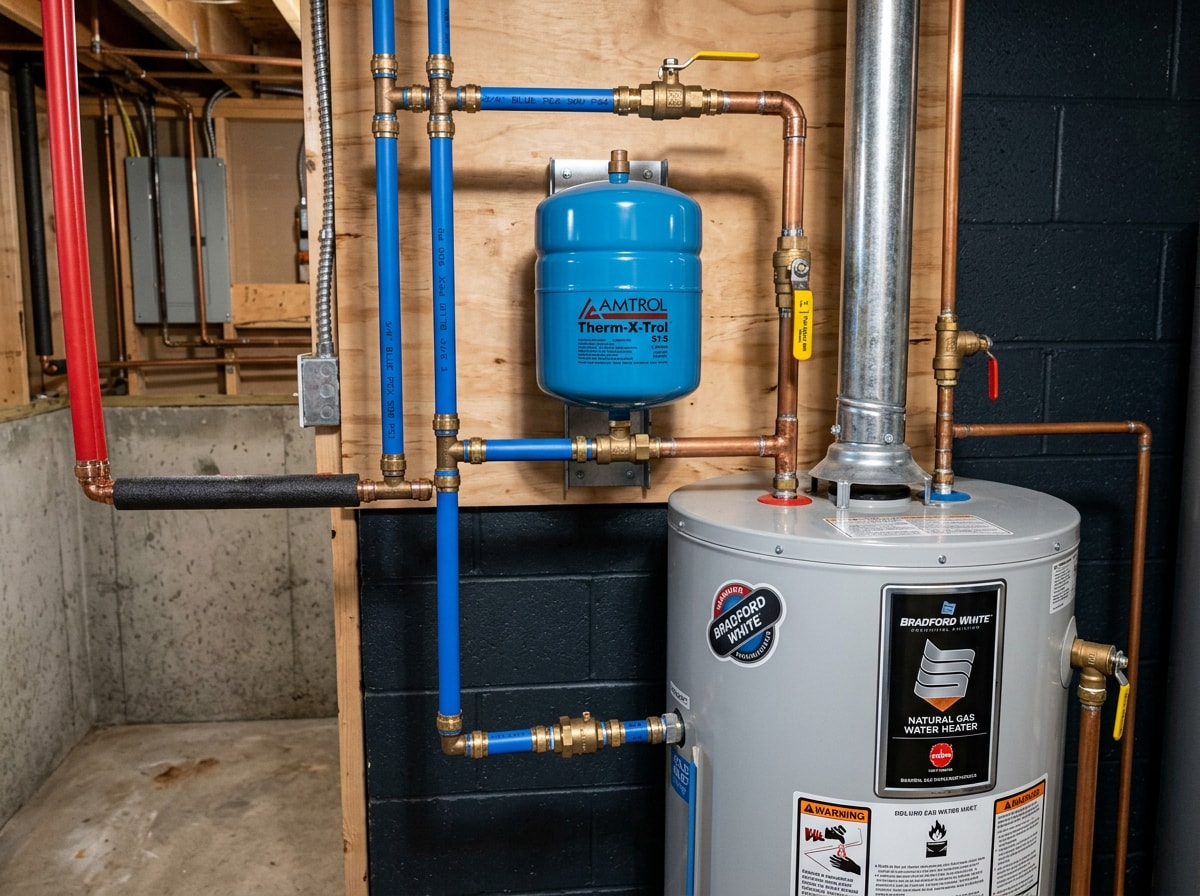
Checking which of these three applies narrows the fix down considerably. A water softener installation can also help here, since scale buildup from hard water makes a tank run hotter and work harder for the same output.
Damaged Dip Tube or Faulty Mixing Valve
Less commonly, a cracked dip tube or a stuck tempering valve can cause sudden temperature swings inside the tank that intermittently trip the relief valve. This is worth ruling out only after pressure and thermostat checks come back normal, since it's a less frequent cause but still a real one in older systems.
How to Diagnose a Leaking Overflow Pipe Safely
Before touching anything, confirm whether water is coming from the pipe's open end (normal discharge location) or leaking around the valve body and threads (a loose fitting, not a true relief event).
If the valve is discharging continuously rather than a slow drip, treat it as urgent:
- Shut off the cold water supply to the tank.
- Turn off the power (electric) or gas supply (gas units).
- Do not attempt to cap or plug the pipe.
Continuous discharge means the tank may be building dangerous pressure, and it's not something to wait out. Hot water discharge from a T&P valve can scald on contact, which is why the Consumer Product Safety Commission recommends keeping water heater temperatures at 120°F in the first place.
If you're not comfortable working near an active water heater, that's a reasonable point to stop and call for help. Our emergency plumbing team handles exactly this kind of call, day or night.
How to Fix a Water Heater Overflow Pipe Leak
Each cause above has a matching fix. Some are within reach for a confident DIYer; others, like gas work or full valve replacement, are better left to a licensed plumber.
Replace the T&P Valve
- Shut off power and water to the tank.
- Drain enough pressure to safely remove the old valve.
- Unscrew it from the tank fitting.
- Wrap the new valve's threads with Teflon tape and install it.
- Reattach the discharge pipe, restore power and water, and watch for leaks over the next few hours.
This is a reasonable DIY task for someone comfortable with basic plumbing, though a licensed plumber can handle it quickly if you'd rather not.
Fix High Water Pressure
Test your home's static water pressure with a hose-bib gauge first. Readings consistently above 80 psi point to a pressure problem rather than a valve problem.
If pressure runs high, a pressure regulator installation on the main water line brings incoming pressure down to a safe, consistent range and often solves the overflow issue without touching the water heater at all.
Adjust or Replace the Thermostat
Check your water heater's thermostat setting and lower it to around 120°F if it's running hotter. If the tank still overheats after adjustment, or the dial doesn't change actual tank temperature, the thermostat itself may need replacement rather than a simple adjustment.
Correct Poor Discharge-Pipe Installation
A discharge pipe that's undersized, capped, run uphill, or otherwise modified from code can cause pressure buildup or improper drainage even when the valve itself works fine. Proper installation calls for an unobstructed pipe of the correct diameter terminating safely near the floor or to an approved drain.
If your tank itself is old enough that multiple components are failing at once, it may be more cost-effective to look at water heater replacement rather than repairing each part individually.
Prevention: Keep the Overflow Pipe Dry
Keeping the overflow pipe dry long-term comes down to a short list of recurring checks:
- Test household water pressure once or twice a year.
- Confirm the expansion tank still holds air pressure (a quick tap test shows if it's waterlogged).
- Flush sediment from the tank annually.
- Never cap or plug the overflow pipe to stop a drip.
Sediment buildup contributes to both valve corrosion and uneven heating, so flushing addresses two causes at once. A routine plumbing inspection catches most of these issues before they show up as a drip on the floor.
In Wexford's older housing stock, where many units haven't had an expansion tank added since the original installation, this maintenance routine matters more than usual. If your water heater is already showing other signs of trouble alongside the overflow leak, our guide on whether you can still shower with a leaking water heater covers what's safe to do in the meantime.
Ready to get it checked out properly? Get a free estimate and we'll diagnose the actual cause instead of guessing.
Visit our homepage to see the full range of plumbing services we offer across the North Hills.
FAQ
Why Is My Water Heater Overflow Pipe Dripping?
Most overflow pipe drips come from excessive pressure or excessive temperature inside the tank, either incoming water pressure is too high, the thermostat is set too hot, or a worn T&P valve or failed expansion tank can't absorb the swing. See the Common Causes section above to narrow it down.
Is It Normal for a Water Heater Overflow Valve to Leak?
Occasional discharge after unusually heavy hot-water use can be normal, since it reflects a brief pressure spike the valve released safely. Continuous dripping or discharge isn't normal and points to one of the causes covered above.
Why Is My Hot Water Heater Leaking From the Overflow Pipe But Not My Cold Water?
If only the hot water side shows the issue, the problem is isolated to the water heater and its related components, not a broader home plumbing issue. That narrows troubleshooting to the tank, valve, thermostat, or expansion tank.
How Do I Stop My Water Heater From Leaking From the Overflow Pipe?
Check water pressure first, since that's the most common cause. If pressure checks out normal, review the thermostat setting next, then inspect the T&P valve and expansion tank condition for wear or failure.
Can I Fix the Water Heater Overflow Leak Myself?
Simple checks like testing pressure or adjusting the thermostat are DIY-friendly for most homeowners. Valve replacement, gas line work, or electrical troubleshooting are better handled by a licensed plumber for safety reasons.
How Much Does It Cost to Fix a Leaking Overflow Pipe?
Cost depends entirely on the cause. A straightforward T&P valve swap is the least expensive fix, while adding a missing expansion tank or installing a pressure-reducing valve costs more because it involves additional parts and labor. A plumber can give you an exact number once the cause is confirmed.
Can a Water Heater Actually Explode From Overflow Pipe Problems?
It's extremely rare, but a water heater tank can rupture if the T&P valve is disabled, blocked, or capped while the thermostat also fails to shut off heat. This is exactly why the valve and its discharge pipe should never be modified or ignored.