You can often take a shower if your water heater is leaking in Warrendale, PA, but it depends on exactly where the leak starts and how bad it's gotten. A slow drip from a drain valve behaves nothing like water pooling around the base of the tank. Before you turn on the hot water, spend sixty seconds looking at the leak itself, because its location tells you almost everything you need to know.
Is It Safe to Shower With a Leaking Water Heater?
Minor leaks from a drain valve, a T&P valve, or a loose supply fitting are usually low-risk for a quick shower. Active, heavy leaks near electrical parts, gas connections, or the bottom of the tank are not safe and need immediate attention.
There's no single answer that fits every household in Warrendale or anywhere else. On service calls across Warrendale and the surrounding Butler County area, our technicians find that most leak calls trace back to a loose drain valve or an aging T&P valve, not a cracked tank. That's good news for homeowners trying to decide whether a five-minute shower is worth the risk, but it's not a guarantee for every unit.
Shower Safety by Leak Location
Not every leak carries the same risk, so it helps to see them side by side instead of guessing. Here's a more complete breakdown than a quick "yes or no," matched to where your leak is actually coming from.
| Leak Location | Shower Safety Verdict | Why |
|---|---|---|
| Drain valve | Generally safe | Slow drip, away from wiring, easy to contain with a bucket |
| T&P valve | Caution | Can signal excess pressure; monitor closely before showering |
| Supply line/fitting | Generally safe | Usually a loose connection, not a tank failure |
| Tank-bottom leak | Not safe | Often means internal corrosion or tank failure is underway |
| Gas connection | Not safe | Risk of gas exposure; shut down and call a professional |
| Near electrical wiring | Not safe | Water and electrical components together pose a shock hazard |
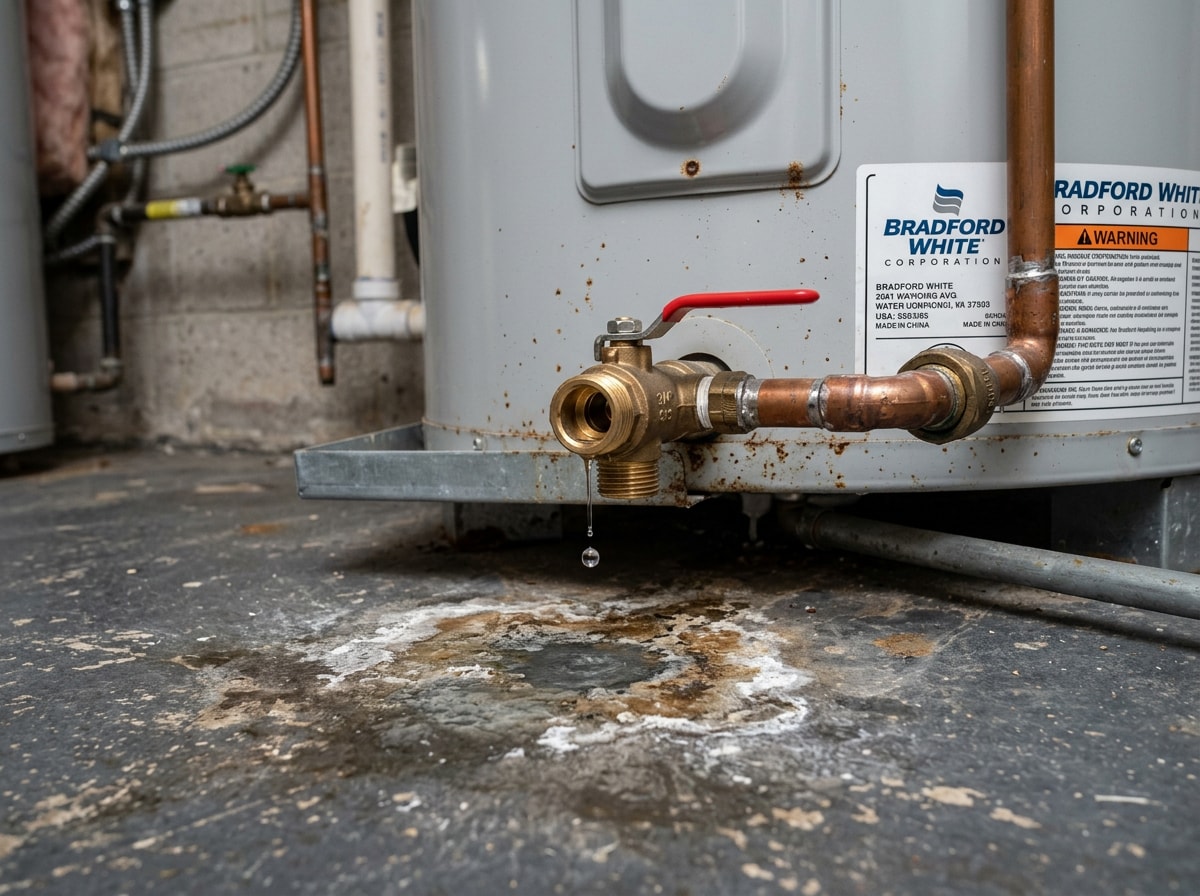
If your leak falls into the "not safe" column, skip the shower and shut the unit down. If you're not sure which category your leak falls into, a quick call to our emergency plumbing team can help you sort it out before you step in.
Why a Water Heater Leaks
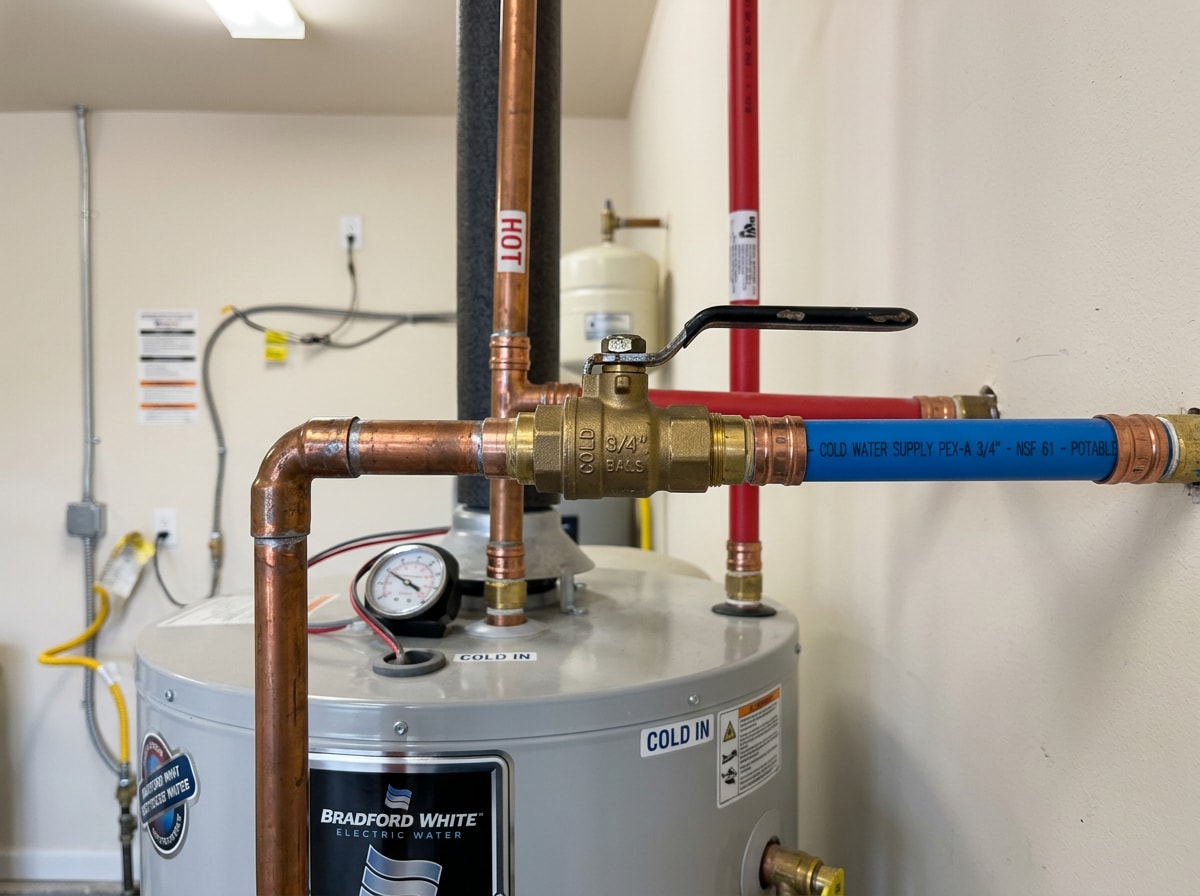
A leak almost always points to a problem with the tank, its connections, or one of its valves. Corroded or damaged tank walls, loose fittings, a failed pressure relief valve, or a degraded rubber hose are the usual culprits. Venting or thermostat issues can play a supporting role too, even if they're not the direct source.
Some leaks start as a barely noticeable drip. Others appear suddenly after a pressure surge inside the tank. Homes on well water around Warrendale and Butler County often deal with harder, mineral-heavy water, which can speed up anode rod and tank corrosion over time. If your unit is getting up in years, a professional water heater repair evaluation can catch a failing part before it turns into a bigger mess.
Risks of Showering With a Leaking Water Heater
Guessing wrong about a leak's severity carries real consequences. Excessive pressure inside a failing tank can, in rare cases, cause the water heater to rupture, and an event like that will almost certainly damage your home.
Risk of Electrocution
Water and electricity do not mix, and a leak that reaches live wiring or an electric heating element creates a genuine shock hazard. Federal regulators have warned for decades that water contacting a powered heating element creates a real danger: potential for serious shock injuries, possibly resulting in electrocution, exists when water contacts the powered heating element . Treat any leak near an electric water heater's wiring as a reason to cut power first and ask questions later.
Risk of Slips and Falls
A leaking water heater often means puddles or damp spots on the floor nearby. Bathrooms and utility closets already have hard, slick surfaces, so added water raises your odds of a slip-and-fall injury considerably.
Water Damage to the Home
Moisture that lingers, even in small amounts, encourages mold and mildew growth within days. Leaving a leak unaddressed can turn a cheap fix into costly drywall, flooring, and air-quality repairs down the road. If the leak is coming from the tank itself rather than a fitting, it's worth asking about water heater replacement instead of a repeat repair.
Immediate Steps If You Notice a Leak
Start with these steps in order:
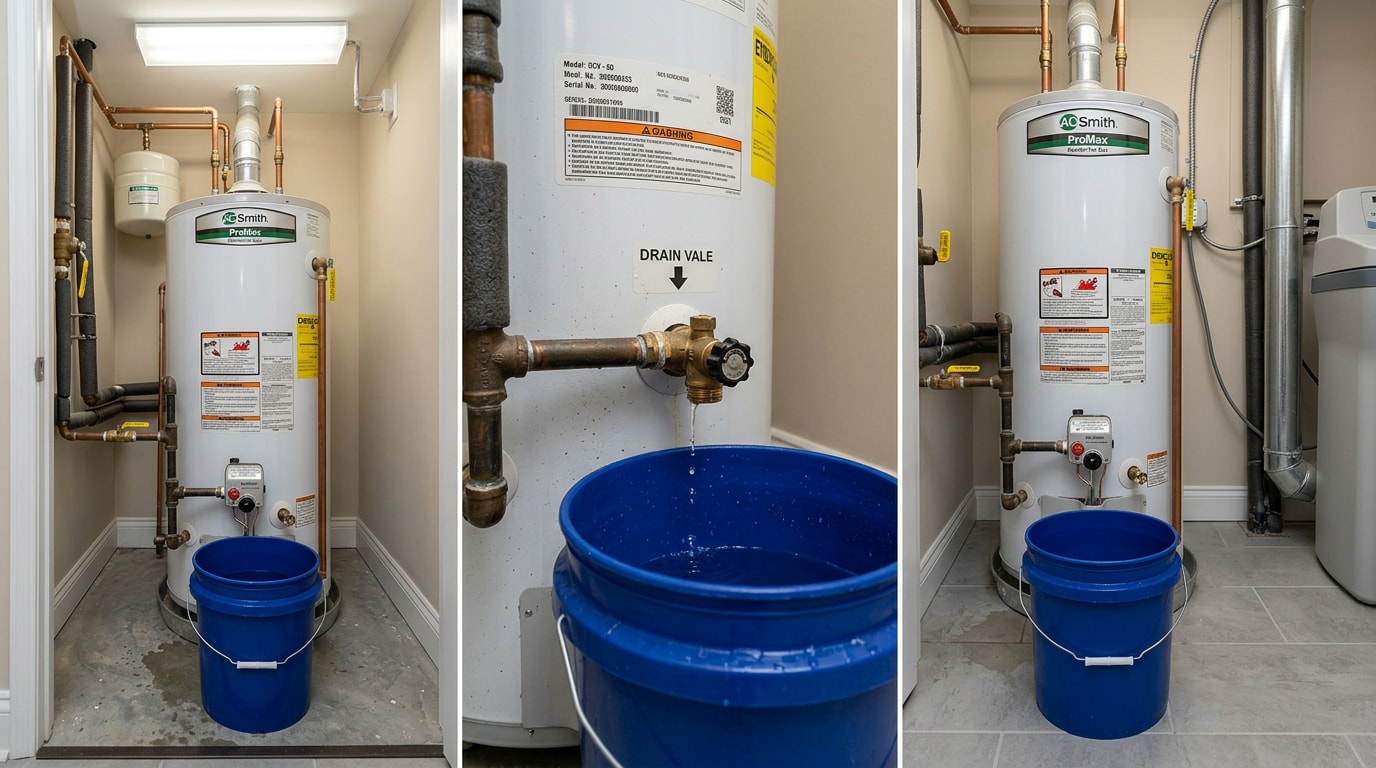
- Shut off the water supply to the heater, then place a bucket beneath the drain valve to catch what's already draining.
- For gas units, turn the gas supply valve to pilot or off.
- For electric models, cut power at the breaker. Never touch exposed wiring near standing water.
- Walk the area once water and power are off, and look for standing water or anything that looks like an electrical hazard.
If you're unsure whether it's safe to proceed, our 24/7 emergency plumber line can walk you through it over the phone. For ongoing pressure issues that keep triggering the T&P valve, a pressure regulator repair may be the real fix, not just a new valve.
Alternative Showering Options
If you've decided a shower at home isn't worth the risk, a few short-term options can bridge the gap until repairs happen:
- A gym day pass or a friend's bathroom
- A simple sponge bath with water heated on the stove
- A nearby campground or RV park, which often rents shower access for a small fee even to non-campers
If you do use water at home in the meantime, stick to cold water only and limit hot water use across the household.
Preventive Measures for the Future
Routine maintenance catches small problems before they become leaks. Check the anode rod periodically, test the T&P valve once or twice a year, and keep smoke and carbon monoxide detectors functioning near gas-powered units.
Federal guidance on home water heating systems recommends hiring a professional to service your home's water heater at least once a year to catch aged gaskets, loose connections, and corrosion before they become leaks. The Department of Energy also tracks efficiency and safety standards for residential water heaters, since the DOE actively promotes energy efficiency in domestic water heating through various initiatives, including updated standards for residential water heaters .
An annual inspection from our plumbing maintenance team extends the life of your tank and lowers the odds of an emergency leak. If you want a ballpark on what repair versus replacement runs locally, our Warrendale installation cost guide breaks down current pricing. For general plumbing needs beyond the water heater, Out of This World Plumbing Services serves homeowners throughout Warrendale, PA and the surrounding communities.
FAQ
Is a Leaking Water Heater an Emergency?
Not always. A slow drip is urgent but manageable, while active flooding, a gas smell, or scalding water signals a true emergency that needs immediate professional help.
Can You Still Use Water if Your Water Heater Is Leaking?
In most cases, yes, temporarily. Most leaks are minor, but it's still essential to identify where and why the leak is happening before you rely on the system normally.
How Do You Find a Leak in Your Water Heater?
Turn off the water supply and power source, then drain the tank partially so you can inspect fittings, valves, and the tank body for corrosion or cracks causing the leak. If you can't pinpoint the source yourself, a professional leak detection visit will confirm it quickly.
Can You DIY Repair Water Heater Leaks?
Don't open the tank or tamper with internal parts, touch gas lines or wiring unless licensed, or patch over rust and cracks, since they signal deeper damage. Don't delay either; slow leaks can cause major water damage over time. Request service if you're unsure what you're dealing with.
Will a Leaking Water Heater Explode?
It's rare, but a stuck or blocked T&P valve can allow pressure to build with nowhere to go, which is why a leaking or constantly dripping T&P valve should never be capped or ignored. Call a licensed plumber the same day you notice it.
How Much Does It Cost to Fix a Leaking Water Heater?
Cost depends on whether the fix is a valve, a fitting, or a full replacement. Our Warrendale, PA pricing guide covers current local ranges so you know what to expect before a technician arrives.