A toilet that keeps overflowing after flush in Warrendale, PA is almost always caused by one of four things: a clog, a blocked vent, a stuck fill valve, or too much paper in the trap. The fix depends on which one you're dealing with, and guessing wrong wastes time while water keeps spreading across the floor. Here's how to tell the difference, stop the water right now, and know when the problem is bigger than a plunger can handle.
What's Really Going On Inside the Tank
Every flush follows the same sequence. Pressing the handle lifts the flapper, tank water drops into the bowl, and that rush of water creates a siphon strong enough to pull waste through the trap and into the drain line.
Once the tank empties, the fill valve reopens and the float tells it when to shut back off. The overflow tube is the backup: if the fill valve doesn't close in time, it carries extra water safely into the bowl instead of over the tank's rim.
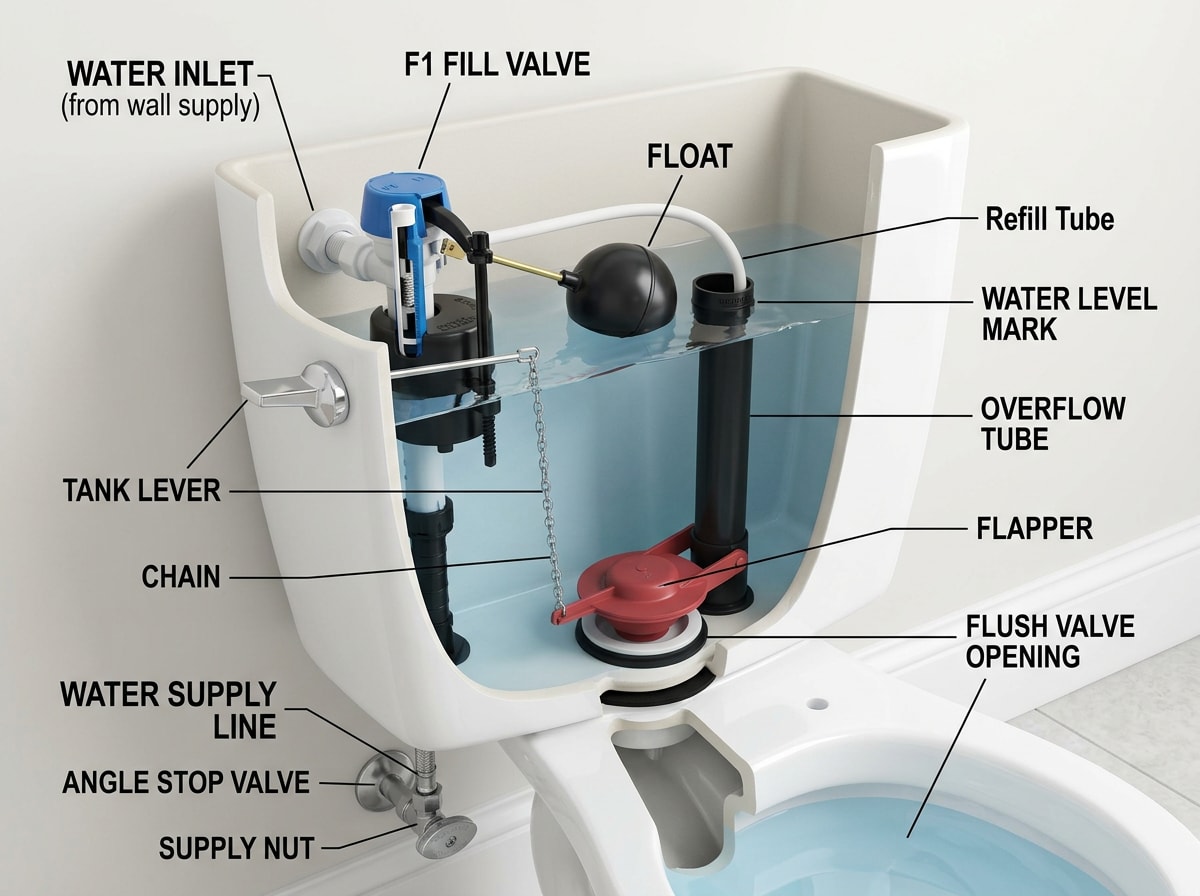
When any one of those parts fails, or when the pipe downstream can't keep up, the water has nowhere to go but out. Our toilet repair team sees the same handful of causes on repeat service calls across the North Hills.
Common Causes of Toilet Overflow After Flushing
Most overflow calls trace back to one of these, roughly in the order plumbers run into them.
Clogged drain or toilet trap. This is the single most common reason a toilet keeps overflowing after flush. Waste water hits a blockage in the trap or the branch line and backs up over the rim instead of moving forward. A bowl that drains slowly on the flush before the overflow is usually the early warning sign.
A blocked vent. Every toilet ties into a vent stack that lets air into the drain system so wastewater can flow. When that vent gets blocked, often by leaves, nests, or ice at the roof termination, pressure builds in the line and pushes water back out of the toilet instead of down it. Plumbing codes require a vent stack on drainage systems for exactly this reason, which is why venting problems aren't a DIY repair. Section 904.2 of the plumbing code states a vent stack is required for every drainage stack with five branch intervals or more , and a blocked roof vent usually causes gurgling in several fixtures at once, not just one toilet.
Too much toilet paper or "unflushables." Excess paper, wipes, or hygiene products restrict flow even in a toilet that's otherwise fine. Flushable wipes in particular don't break down the way toilet paper does and snag inside the trap. WaterSense labeled toilets are independently certified to meet EPA's criteria for both performance and efficiency , but even a well-performing low-flow toilet has a limited volume of water to carry bulky material through the trap.
A failing tank mechanism. A fill valve, float, or flapper that's worn out can keep feeding water into a tank that never fully shuts off, which spills past the overflow tube even though the drain is completely clear.
Why Is My Toilet Overflowing But Not Clogged?
When a toilet overflows but nothing downstream is blocked, the cause is almost always mechanical: a stuck fill valve, a float set too high, or a flapper and chain that won't seal. Water keeps entering the tank and spilling into the overflow tube instead of shutting off, even with a clear drain.
To check, lift the tank lid, flush, and watch closely. If water keeps running into the overflow tube instead of stopping, you're likely dealing with a fill valve that's stuck open or a float set too high, essentially a running toilet that never quite shuts off. Our toilet repair page covers what a fill valve or flapper swap typically involves.
Why This Shows Up More Often in Warrendale's Older Homes
Warrendale sits in a mix of older ranch and split-level housing stock alongside newer developments, and the plumbing underneath those older homes is a real factor in overflow calls. Cast iron drain stacks installed decades ago narrow internally as scale and corrosion build up, which slows drainage long before a homeowner notices anything wrong on the surface.
Winter makes vent blockages more common here too. A roof vent that ices over after a freeze-thaw cycle cuts off airflow the same way a nest or leaf pile does, and it tends to happen right when heavier holiday-season toilet use puts extra demand on the system. If your home sits outside the public sewer service area, a toilet that overflows along with slow drains elsewhere in the house can also point to a septic system nearing capacity rather than a simple clog.
Immediate Steps to Take When Your Toilet Is Overflowing
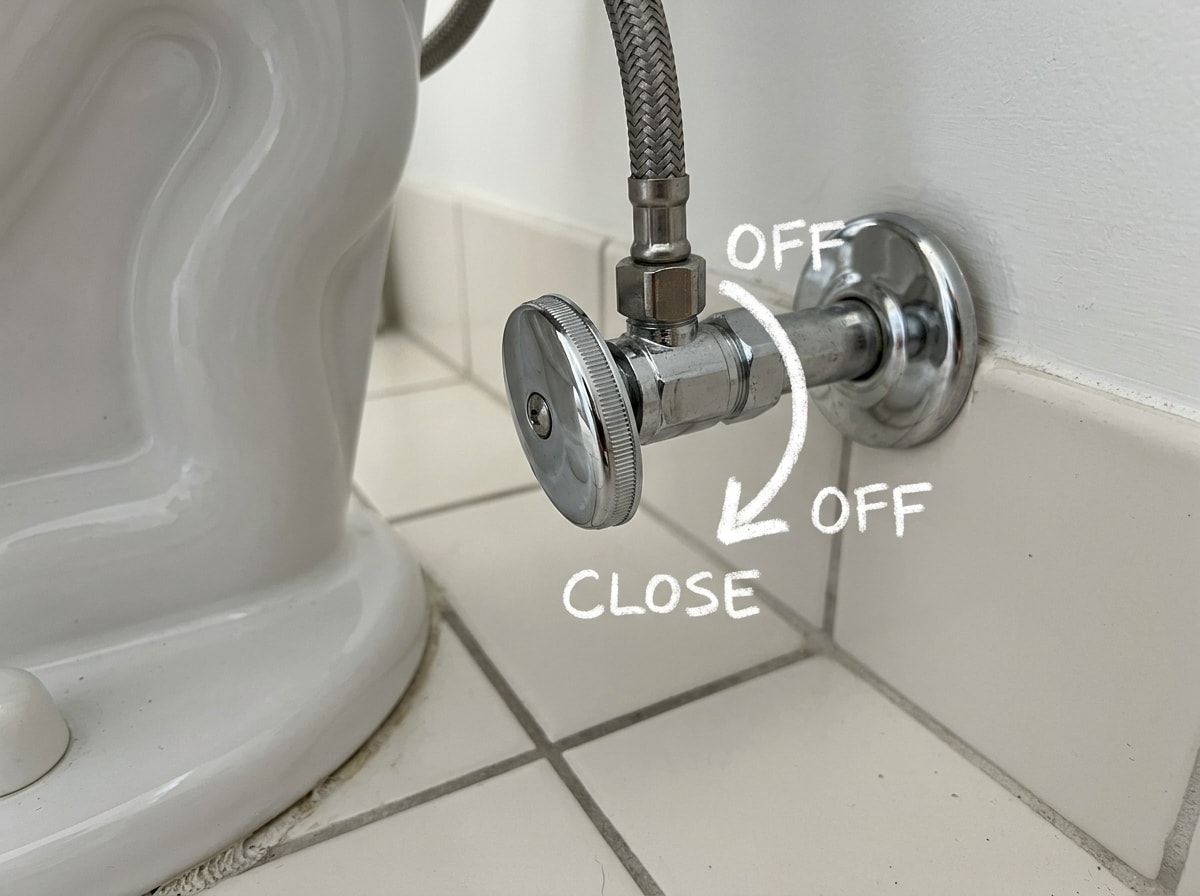
Shut off the water supply valve at the base of the toilet first. It's usually a small oval handle behind the bowl, and turning it clockwise stops water from feeding the tank.
Don't flush again until the bowl drains some on its own. A second flush just adds more water to a bowl that's already full. Towels or a wet-dry vacuum can manage water that's already on the floor.
Going forward, watch that each flush fully clears the bowl before you walk away. A partial clear that looks fine in the moment can turn into a full overflow on the very next flush.
How to Fix an Overflowing Toilet (Step-by-Step)
Once the water's off and the floor is dry, work through these steps in order:
- Shut off the water supply valve fully, if you haven't already.
- Remove excess standing water from the bowl so you can see what you're working with.
- Plunge with a flange plunger, pressing firmly for 15 to 30 seconds at a time.
- Turn the water back on partway and run a test flush, watching closely how the bowl drains.
- If it's still not clearing, repeat the plunging or move to a toilet auger, which reaches further into the trap than a plunger alone.
Here's a quick way to tell whether to keep troubleshooting or pick up the phone:
| Situation | What It Likely Means | Recommended Action |
|---|---|---|
| Bowl clears after plunging, doesn't return | Isolated clog from paper or waste | No further action needed |
| Water keeps filling and spilling into the overflow tube | Fill valve, float, or flapper failure | Tank component repair |
| Bowl won't clear after several rounds of plunging | Deeper trap or branch line blockage | Drain cleaning or auguring |
| Multiple toilets or drains back up together | Main line or vent blockage | Sewer camera inspection |
| Bowl refills on its own with the valve closed | Mechanical failure, not a clog | Toilet repair |
If water doesn't drop after several rounds of plunging, or the bowl refills on its own with the valve closed, stop the DIY attempts. Both point to a problem beyond a simple clog. Our drain cleaning service handles blockages that don't respond to home fixes, and it's worth reading our guide on why a toilet won't flush all the way if sluggish flushing has been building up before the overflow started.
Is a Recurring Overflow a Sign of a Bigger Problem?
A one-time overflow that clears after plunging and doesn't return is usually just an isolated clog from paper, waste, or a flushed object. Once it's resolved, there's typically nothing more to worry about.
A recurring overflow is a different story. If the same toilet keeps backing up, or other drains act up at the same time, the cause is more likely a main line blockage, a failing septic system, or a vent problem feeding more than one fixture. These don't resolve with more plunging because the blockage sits further down the line, and a sewer camera inspection is usually the fastest way to find exactly where.
A few signs point toward calling a professional instead of continuing to troubleshoot:
- Multiple drains backing up together
- An overflow with no fresh flush triggering it
- Any sewage smell near drains or in the yard
- Water rising in the tub or shower when the toilet is flushed
Beyond property damage to subfloors and drywall, contact with sewage-contaminated water carries real health risks. Health authorities advise people to avoid contact with any floodwater that may be contaminated with sewage because it can make you sick . When any of these signs show up, it's time to call a plumber rather than keep troubleshooting on your own.
If the overflow is active right now and spreading, our 24/7 emergency plumbing team can respond the same day. For anything less urgent, get a free estimate and we'll walk through what's likely causing it before anyone sets foot in your home.
Homeowners throughout Warrendale, PA call us for exactly this kind of troubleshooting, and the pattern holds steady: most overflow calls turn out to be a clog or a worn tank part, not a sewer line replacement. Our licensed team at Out of This World Plumbing Services diagnoses the cause on the first visit so you're not paying for guesswork.
FAQ
Why does my toilet overflow even when it's not clogged?
Usually it's mechanical, not a clog. A stuck fill valve, high float, or flapper that won't seal can keep water running into the tank and spilling past the overflow tube, a toilet-overflow-no-clog situation that's typically an easy fix.
Can the fill valve cause my toilet to keep overflowing?
Yes. If the fill valve doesn't shut off, water keeps rising until it spills into the overflow tube and eventually out of the tank. This is one of the most common non-clog causes, usually fixed with a valve replacement.
Is it bad to flush too much toilet paper at once?
Yes, especially in low-flow toilets. Too much toilet paper or flushable wipes can bundle up inside the trap and block flow, even in a toilet that otherwise works fine. Flushing smaller amounts helps avoid this entirely.
Is it normal for a toilet to overflow just once?
A single overflow that clears after plunging and doesn't come back is usually a one-off clog, not a sign of a bigger issue. If it happens again within a few flushes, or spreads to other drains, treat it as a different problem.
How do I know if my sewer line is clogged?
Signs of a sewer line clog include multiple drains backing up at once, gurgling when you run water or flush, and water rising in the tub when the toilet is flushed. If you're seeing these signs in Warrendale, PA, a sewer camera inspection can pinpoint the blockage before it causes more damage.
Can a blocked roof vent really cause a toilet to overflow?
Yes. The vent lets air into the drain system so water can flow freely; without it, pressure builds and pushes water back out of the fixture instead of down the drain. This usually shows up as gurgling in more than one fixture, not just the toilet.