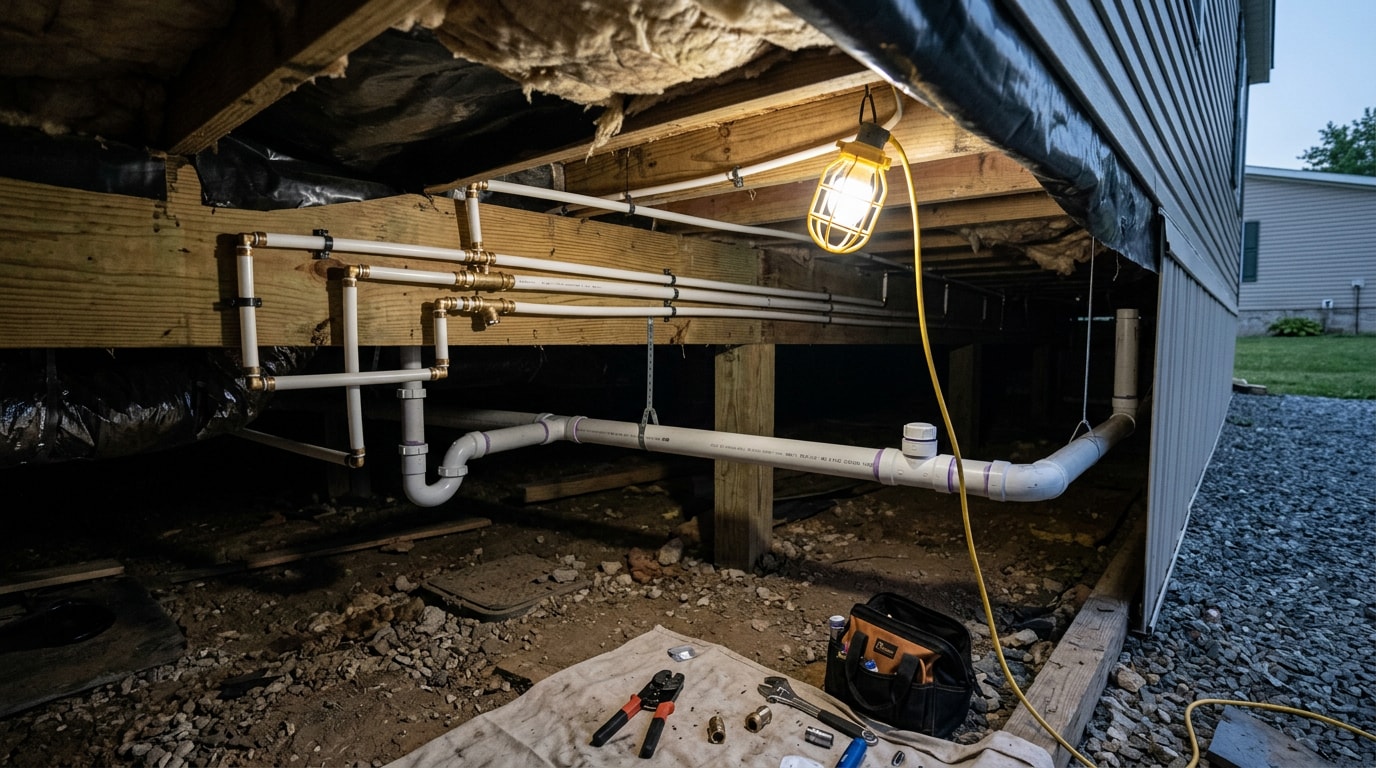
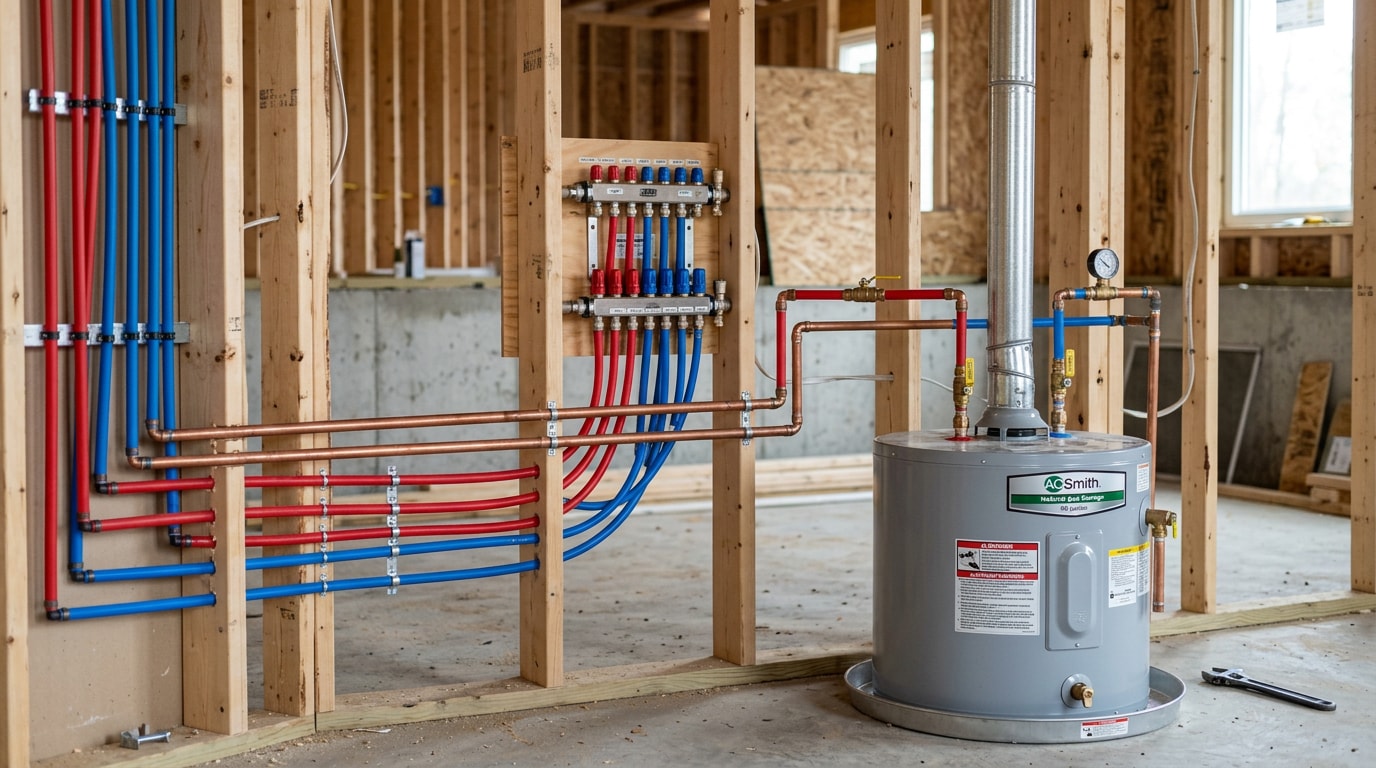
Plumbing installation cost in Warrendale, PA typically runs $4,500 to $15,000 for a full single-family home, or $4.50 to $7.00 per square foot. Six factors drive that range: home size, fixture count, pipe material, labor, project type, and permits. This guide breaks down real 2026 pricing for each one, plus a code change taking effect this year that most cost guides never mention.
Average Plumbing Installation Cost in Warrendale, PA
Most homeowners in the area should budget $8,000 to $10,000 for a complete residential plumbing system. That covers rough-in piping, fixture trim-out, and a final pressure test.
Material costs and permit timelines shift the final number more than people expect. A 2,000 sq ft home with two bathrooms and a 2,000 sq ft home with three bathrooms and a basement bath can land $4,000 apart even at the same per-square-foot rate, because fixture count and pipe runs scale faster than floor area alone.
Get a project-specific number before you lock in a budget. Our Warrendale, PA plumbing team provides free written estimates, and you can request a free estimate directly online.
What Affects Your Plumbing Installation Cost
Seven variables shape nearly every residential quote: home size, project type, fixture count, pipe material, labor rates, local permit requirements, and the 2026 code update covered below. Reading a bid line by line against these factors tells you more than comparing bottom-line numbers alone.
Cost by Home Size or Square Footage
A 2,000 sq ft house typically costs $9,000 to $14,000 to plumb from start to finish, based on a per-square-foot rate of $4.50 to $7.00. Smaller homes cost proportionally less. Larger, multi-bathroom layouts push toward the higher end.
| Home Size | Estimated Plumbing Cost |
|---|---|
| 800 sq ft | $3,600 - $5,600 |
| 1,500 sq ft | $6,750 - $10,500 |
| 2,000 sq ft | $9,000 - $14,000 |
| 2,500 sq ft | $11,250 - $17,500 |
| 3,000+ sq ft | $13,500 - $21,000+ |
Cost by Project Type
Rough-in plumbing, the pipe and venting work done before walls close, typically runs $1,500 to $5,000 depending on bathroom and fixture count. A full new-construction install, covering rough-in plus trim-out and fixtures, lands at the top of the pricing scale. A simple fixture swap, by contrast, might run only a few hundred dollars since no new piping is involved.
Cost by Fixture Type and Quantity
Cost per fixture varies widely by type and finish level.
| Fixture | Installation Cost |
|---|---|
| Sink | $150 - $500 |
| Toilet | $200 - $600 |
| Tub/Shower | $450 - $2,000 |
| Water Heater | $1,000 - $3,500 |
| Dishwasher Connection | $150 - $400 |
Water heater installation is one of the larger single line items on most quotes, with tankless units sitting at the top of that range.
Cost by Piping Material: PEX vs. Copper vs. CPVC
The pipe material you choose changes the bid more than almost any other line item.
- PEX: about $0.40 to $1.00 per linear foot installed. Flexible, fast to run, and now the default supply-line choice on most new residential jobs because it cuts labor time.
- Copper: $2.00 to $8.00 per linear foot. Durable and long-lasting, but pricing swings with metal markets.
- CPVC: roughly $0.50 to $1.50 per linear foot. Decent heat tolerance at a lower price than copper.
If you're repiping an older home instead of installing new lines, our pipe replacement page breaks down that process separately.
Labor Charges
Most plumbers charge an hourly rate between $45 and $200, depending on experience and whether you're hiring an apprentice or a master plumber. Many installation jobs are priced flat-rate instead. For context, the national median wage for plumbers, pipefitters, and steamfitters was $63,800 in May 2025 , which works out to roughly $30.67 an hour before overhead, materials, and markup are added to a homeowner-facing quote, according to the U.S. Bureau of Labor Statistics.
Permits and Local Regulations
Permit cost typically runs $50 to $500 depending on project scope and municipality, and most installation work legally requires one. Warrendale-area homeowners fall under Allegheny County jurisdictions, and requirements vary by township, so confirm specifics with your local building department before work begins.
Here's the detail most cost guides miss: for municipalities that follow the Pennsylvania Uniform Construction Code, permits sought after January 1, 2026 fall under the 2021 International Codes as amended by the UCC Review and Advisory Council . If your installation quote was written before that date on an older code basis, ask your contractor whether the updated provisions change your scope or fixture requirements. You can review the current rules on the Pennsylvania UCC program page.
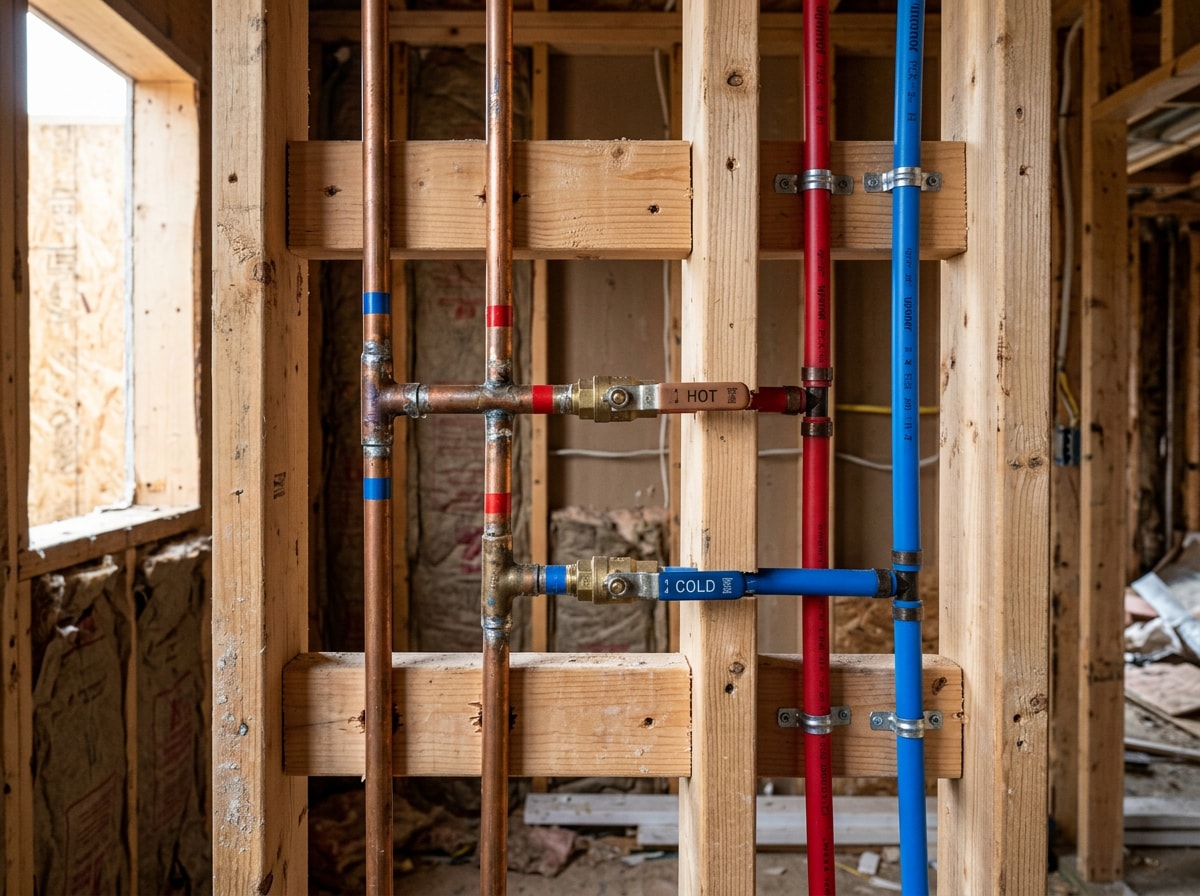
The Plumbing Installation Process, Step by Step
Knowing what's involved explains why quotes vary so much between contractors. Most residential jobs follow four stages:
- Planning and permitting - scope, fixture count, and permit applications are finalized before any pipe is cut.
- Rough-in plumbing - drain-waste-vent and supply lines run through open framing before walls close.
- Pressure testing - the system is tested under pressure to confirm there are no leaks before inspection.
- Fixture installation - sinks, toilets, and water heaters go in once walls, floors, and cabinets are finished.
Rushing any of these stages is usually where expensive problems start. In our own installs across Warrendale and Cranberry Township homes, the stage that most often blows a budget isn't labor, it's a rough-in that wasn't planned around where the final cabinets and vanities would land.
Detailed 2026 Cost Breakdown: Two Real-World Scenarios
Pulling every factor together gives a clearer total cost picture than any single line item alone. The table below is an illustrative estimate built from typical regional pricing, not a quote, comparing two common scenarios.
| Component | 1-Bath Home | 3-Bath, 2-Story Home |
|---|---|---|
| Fixtures | $1,200 | $4,500 |
| Pipe & Fittings | $1,000 | $3,200 |
| Labor | $2,500 | $7,000 |
| Permits | $150 | $400 |
| Contingency (10%) | $485 | $1,510 |
| Total | $5,335 | $16,610 |
Bathroom count compounds cost fast. Tripling your fixture count more than triples your total, because labor hours and pipe runs scale alongside the fixtures, not just the fixture price tags themselves.
System Testing, Inspections, and Code Compliance
A plumbing inspection and pressure test confirm the work is safe and watertight before walls close. Failing inspection means costly rework, so code compliance matters as much as the installation itself. Our plumbing inspection service exists specifically to catch these issues before they become demolition bills.
Common Code Violations to Avoid
The most common violations inspectors flag are prohibited S-traps and excessive trap-to-vent distance, both of which can let sewer gas back into the home instead of venting it outside. A P-trap paired with proper venting is code-compliant; an S-trap creates a siphoning effect that empties the trap's water seal. Vent pipe rules set maximum distances between fixtures and vents, and a licensed installer who misses this on the first pass can face expensive re-installation. The International Code Council publishes the International Plumbing Code provisions that cover these exact clearance and venting rules, and Pennsylvania's UCC adopts them with state-specific amendments.
How to Reduce Plumbing Installation Costs
A few practical choices keep your quote closer to the low end of these ranges.
- Schedule non-emergency work in advance. Emergency plumbing calls often carry after-hours or rush surcharges that a scheduled install avoids entirely.
- Batch installation work. Adding a fixture while a bathroom is already being remodeled spreads labor across one visit instead of several.
- Choose PEX where code allows it. It cuts material and labor cost per linear foot without sacrificing longevity on most residential runs.
- Get a written, itemized estimate before work starts, so fixture, labor, and permit costs are broken out separately.
Browse our full plumbing services lineup to compare options before committing to a scope, or visit our homepage for an overview of everything we handle in Allegheny County. Homeowners dealing with a sewer issue alongside a new installation should also see our Mars, PA plumbing and sewer repair guide for related cost context.
FAQ
How much does it cost to install plumbing in a new house?
The cost to install plumbing in a new house typically ranges from $4,500 to $15,000 or more, depending on square footage, bathroom count, and pipe material. Most single-family homes fall between $8,000 and $12,000 for a complete system.
What is the average cost to plumb a 2,000 sq ft house?
Plumbing a 2,000 sq ft house typically costs $9,000 to $14,000, based on a per-square-foot rate of roughly $4.50 to $7.00. Final pricing depends on bathroom count and whether you choose PEX, copper, or CPVC piping.
Do I need a permit for plumbing installation?
Yes. Most plumbing installation work requires a permit before it begins. The exact requirement and fee vary by township, and Pennsylvania's Uniform Construction Code updates to the 2021 I-Codes for permits sought after January 1, 2026. Check with your local Allegheny County building department for specifics.
How much does a plumber cost per hour?
Hourly rates typically run $45 to $200, depending on experience level and region. Many installation projects use flat-rate pricing instead of hourly billing, since a fixed quote makes budgeting easier on larger jobs.
Is it cheaper to install plumbing during new construction than during a remodel?
Generally, yes. New construction plumbing goes in before walls close, so pipes run through open framing without cutting into finished surfaces. A remodel often costs more per fixture because contractors need to open walls or floors to reach existing lines.
Is PEX actually cheaper than copper to install?
Yes, on both material and labor. PEX runs about $0.40 to $1.00 per linear foot installed versus $2.00 to $8.00 for copper, and it takes less labor time to run through framing, which is why most new residential jobs now default to it for supply lines.