A clear rv plumbing diagram turns a confusing tangle of hoses under your RV into a system you can actually troubleshoot. Warrendale's freeze-thaw winters and humid summers both stress these systems in different ways, so knowing what each line, tank, and valve does matters before something fails. This guide breaks down every component so you can read a diagram like a technician, not guess like a stranger under your own rig.
How Does RV Plumbing Work?
RV plumbing pulls water from two possible sources: a fresh water tank onboard, or a pressurized city hookup at a campsite. A 12-volt pump pressurizes tank water when you're off-grid, while city water bypasses the pump entirely and feeds fixtures directly.
Once water is used, it splits into two separate paths. Sink and shower water drains to the gray tank, and toilet waste drains to the black tank, both of which get emptied at a certified dump station.
This two-tank separation is the single biggest difference from house plumbing, where everything goes down one shared drain line. An RV also has to be fully drained before a hard freeze, something a house plumbing system never has to worry about.
Core Components Every RV Plumbing Diagram Shows
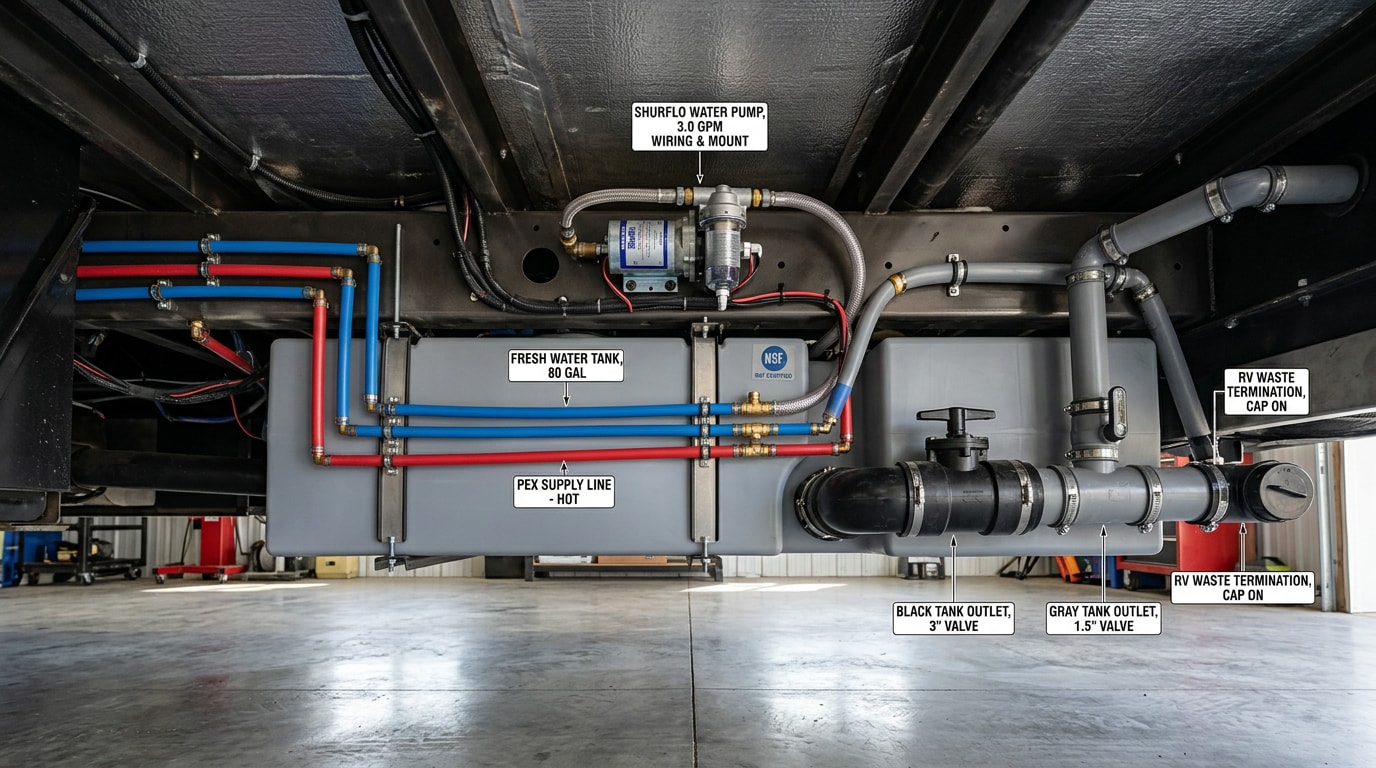
Every RV, regardless of floor plan, relies on the same handful of parts: a fresh tank, a pump, two waste tanks, a water heater, and the valves connecting them. Learn to spot these five on any diagram and troubleshooting gets far less intimidating.
Fresh Water Tank and City Inlet
The fresh tank stores potable water for drinking, cooking, and washing when you're not hooked up. Most rigs have a gravity-fill port for manual filling plus a separate city water inlet for direct pressurized connection.
Count your tanks and you'll typically land on four: fresh, gray, black, and the water heater tank. The fresh tank is the starting point on nearly every RV plumbing diagram, since all supply lines trace back to it or the city connection.
Water Pump and Accumulator Tank
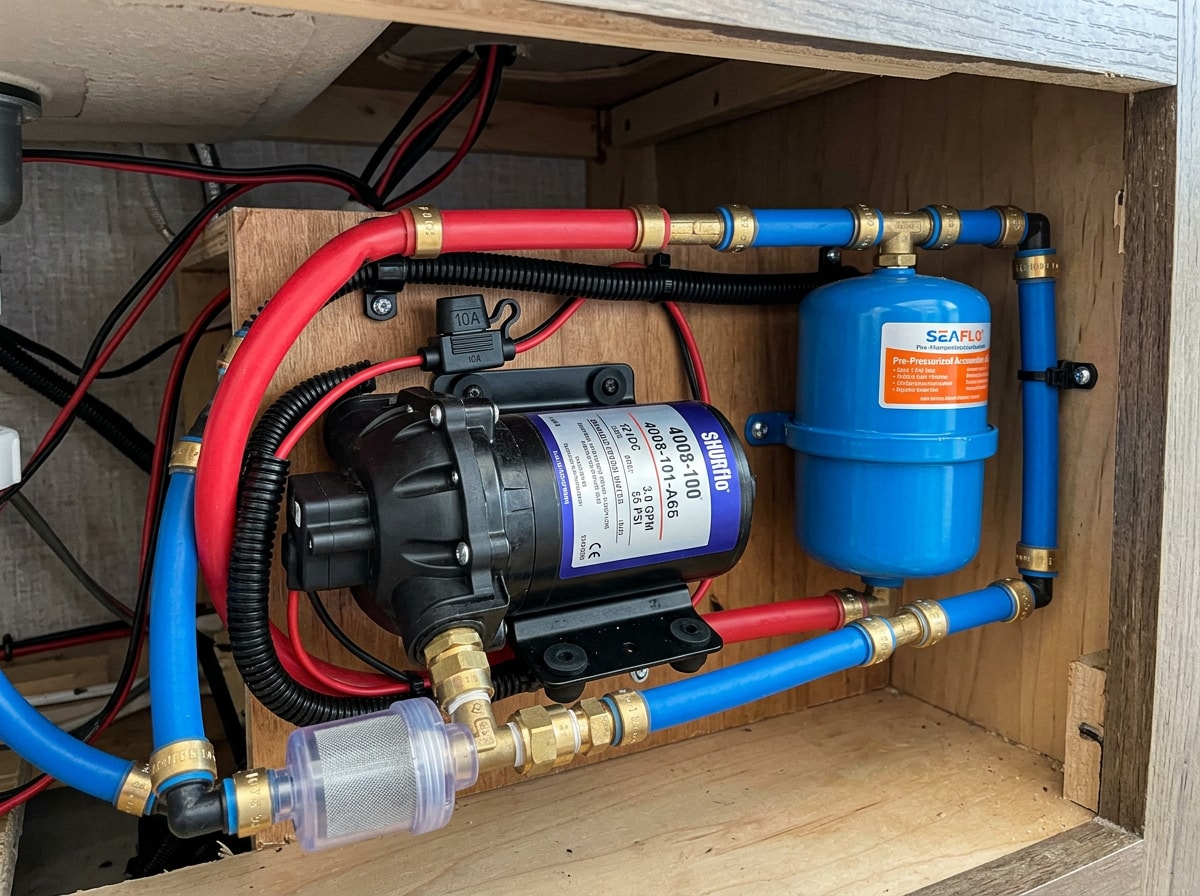
The RV water pump draws from the fresh tank and pressurizes the lines whenever city water isn't connected, cycling on and off through a pressure switch as faucets open and close. Many systems add an accumulator tank near the pump, which uses a pre-pressurized air bladder so the pump doesn't need to cycle on again every time a faucet opens, since the bladder absorbs small pressure changes , which eases the burden on the pump and extends its life .
If a pump won't prime, work through this short list before assuming the motor is dead:
- Confirm the check valve isn't stuck closed.
- Check the inline fuse on the pump's circuit.
- Bleed air from the lines by running a faucet until the flow steadies.
These three issues cause most priming complaints we hear about.
Gray and Black Water Tanks
The gray tank collects sink and shower water; the black tank holds everything flushed from the toilet. Both vent through a roof pipe that releases sewer gases outside instead of letting them build up in the cabin.
Gray water looks harmless, but dumping it anywhere outside a designated station breaks most campground and municipal rules. The EPA's guidance on RV wastewater also warns that some holding-tank chemicals can harm septic and treatment systems, so those products contain chemicals which may pollute water resources if used carelessly. Always empty tanks at a certified dump station.
Valves, Vents, and Fittings
Valves and fittings route water to heaters, tanks, and drains throughout the rig. Two matter most for seasonal maintenance:
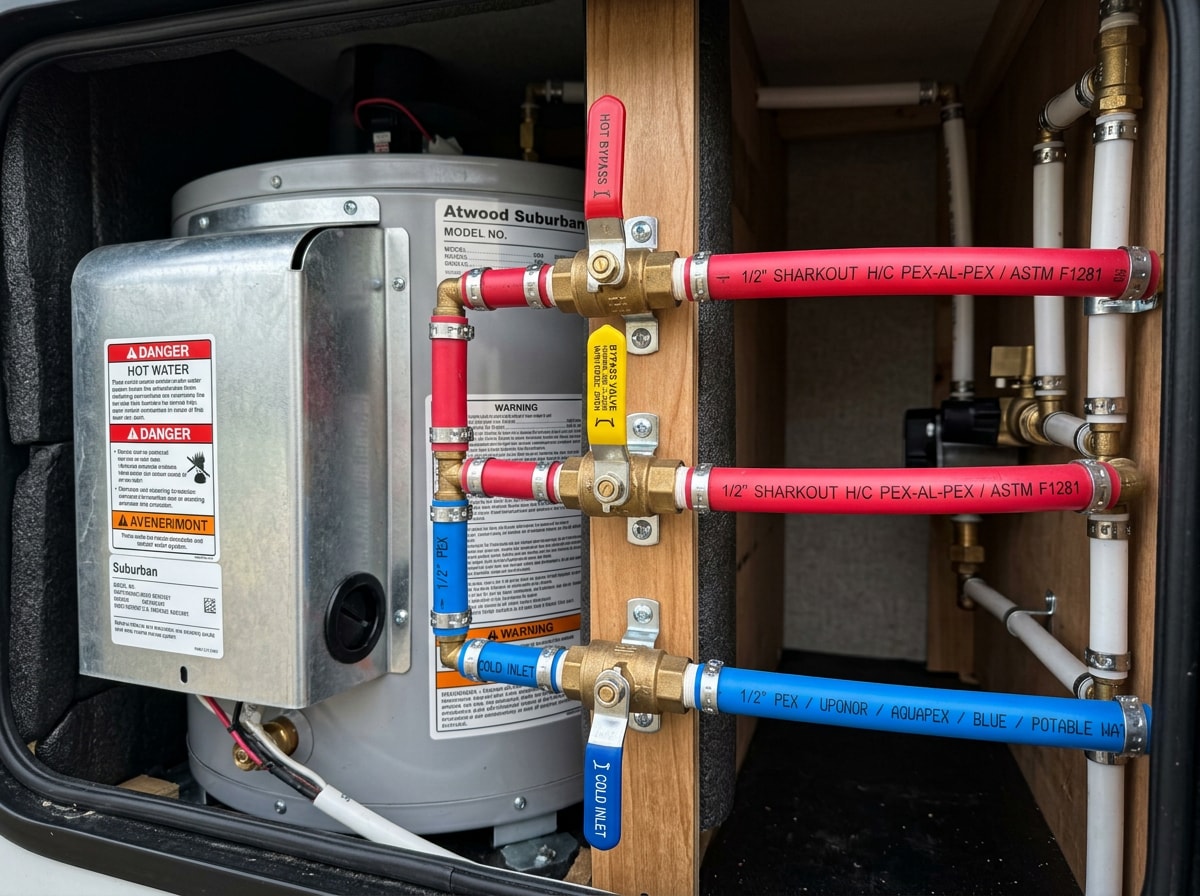
- Bypass valve — reroutes water around the water heater during winterizing.
- Pressure regulator — protects interior plumbing from overly aggressive campground water pressure.
An inline filter near the city inlet catches sediment before it reaches your fixtures.
What Type of Pipe Does an RV Use?
RV builders generally choose between three materials, and each one has a specific job.
| Material | Used For | Key Trait |
|---|---|---|
| PEX | Pressurized fresh water supply | Flexible, connects with push-fit or crimp fittings |
| ABS plastic | Drain and vent lines | Rigid, chemical-resistant, handles wastewater |
| Copper/metal | Older rigs, connection points | More durable, harder to repair in the field |
PEX dominates modern supply lines because it resists freezing, which minimizes the potential for cracked, frozen, or burst pipes compared to rigid alternatives, and it costs less to install or repair.
ABS, by contrast, is a black-colored plastic used primarily for drainage, sewage, and ventilation lines rather than pressurized supply. It holds up against the chemical exposure of wastewater, though it cracks rather than flexes if it freezes solid.
Industry construction standards for these materials are set out in NFPA 1192, the Standard on Recreational Vehicles, which establishes criteria for fuel systems, plumbing, and fire and life safety in RVs . The RV Industry Association oversees adoption of that standard, and its Plumbing Technical Subcommittee covers fresh water, toilets, and both water and sewage drainage and storage systems across member manufacturers.
RV Water Heater: Don't Skip This Step
Never fire up an RV water heater unless the tank is already full of water. Running the electric element or gas burner dry can damage the heating elements within minutes , and that's an expensive mistake to make on day one of a trip.
Most diagrams show a water heater bypass loop, which lets antifreeze skip the tank entirely during winterizing. Filling a six-gallon tank with antifreeze wastes product for no benefit, so the bypass routes winterizing fluid straight to the fixtures instead.
Reading an RV Plumbing Schematic
A generic schematic gives you a sense of how water moves through a rig, but it's not a precise map. Actual layouts shift based on manufacturer and floor plan, so treat any generic diagram as a starting reference, then confirm specifics against your owner's manual.
Most schematics use color conventions to speed up tracing:
- Start at the water source, either the fresh tank or city inlet.
- Follow the line to the pump and filter.
- Trace it out to individual fixtures (blue typically marks cold lines, red marks hot).
- Separately trace drain lines down to the gray and black tanks.
A rough sizing reference also helps when you're matching a diagram to real parts under the rig:
| Line/Fitting | Typical Size |
|---|---|
| Fresh water supply line | 1/2-inch PEX (some runs use 3/8-inch) |
| Black tank outlet | About 3 inches |
| Gray tank outlet | About 1.5 to 3 inches |
It's normal for a small amount of antifreeze to reach the fresh water tank during winterizing, since the tank usually isn't bone-dry when you start flushing the system.
RV Sink Plumbing: Where Does It Drain?
Kitchen and most bathroom sinks drain into the gray tank through ABS lines running beneath the cabinetry. Some floor plans route the bathroom sink into the black tank instead, especially in smaller rigs where tank space is tight, so it's worth confirming which setup your model uses.
This distinction matters when you're troubleshooting odors or slow drains. A sink tied to the black tank behaves differently than one feeding gray water, and tracing the line yourself (or checking the owner's manual) clears up the confusion fast.
Winterizing Timeline for Warrendale, PA RV Owners
Timing matters more here than in milder climates. Pittsburgh's average first freeze lands around October 20, with the average last freeze around April 25 , based on the current 30-year climate normal. That gives Warrendale RV owners a fairly narrow window to winterize before overnight temperatures put fresh lines, low-point drains, and the water heater tank at risk.
A few practical notes for that window:
- Drain the fresh tank and water heater before the first hard freeze, not after.
- Run the bypass valve before adding antifreeze, so you're not wasting product filling the tank.
- Check the pressure regulator at the city inlet each spring; a damaged one can let campground pressure spikes stress PEX fittings all season.
We're not an RV service bay, but the plumbing principles overlap with fixed home systems more than you'd expect. If you want a licensed plumber to check your home's pressure regulator, water heater, or supply lines before camping season, our team at Out of This World Plumbing Services handles that work across Warrendale, PA and nearby Cranberry Township, PA.
Relevant services include:
If you're also budgeting for fixed plumbing work at your home base this year, our Plumbing Installation Cost in Warrendale, PA guide breaks down current local pricing.
Ready to talk through a pressure, leak, or water heater issue at home? Get a free estimate and we'll walk through it with you.
FAQ
How Does RV Plumbing Work?
Water comes from either the fresh tank or a city hookup, and the pump pressurizes that supply so it reaches every faucet and shower head. Used water then splits into two paths: sink and shower water goes to the gray tank, and toilet waste goes to the black tank.
Is RV Plumbing the Same as House Plumbing?
Not quite. House plumbing sends all wastewater down one shared line to a sewer or septic system, while RV plumbing separates gray and black water into two holding tanks that need to be manually dumped. RVs also require full winterization before freezing weather, which fixed home plumbing doesn't.
What Type of Pipe Does an RV Use?
RVs primarily use PEX for pressurized supply lines and ABS plastic for drain and vent lines. PEX flexes and resists minor freeze expansion, while ABS withstands the chemical exposure of wastewater without degrading.
What Size Is RV Plumbing?
Most fresh water lines use 1/2-inch PEX tubing, though some manufacturers use 3/8-inch for shorter runs. Black tank outlets typically measure about 3 inches, while gray tank outlets often run slightly smaller depending on the model.
How Do You Winterize RV Plumbing?
Drain the fresh tank, open the low-point drains, and route the system through the water heater bypass valve so antifreeze doesn't fill the tank unnecessarily. Then pump RV-safe antifreeze through each faucet, the toilet, and the outside shower until it runs pink at every fixture.
How Do You Read an RV Water System Diagram?
Start at the water source, either the fresh tank or city inlet, then follow the line to the pump and filter. From there, trace the path to individual fixtures, and separately follow the drain lines down to the gray and black tanks. Blue typically marks cold lines and red marks hot, which speeds up tracing once you know the convention.