Low water pressure in your bathroom sink in Mars, PA almost always comes down to one of eight fixable causes, not a failing water heater or a doomed pipe system. Most homeowners solve it in under 15 minutes once they know whether the problem is isolated to the sink or spread across the house. Here's the exact order our techs check on calls across Adams Township, Cranberry, and Valencia, including the one cause most guides skip entirely: well pressure tanks.
Isolated Sink or Whole-House Problem? Check This First
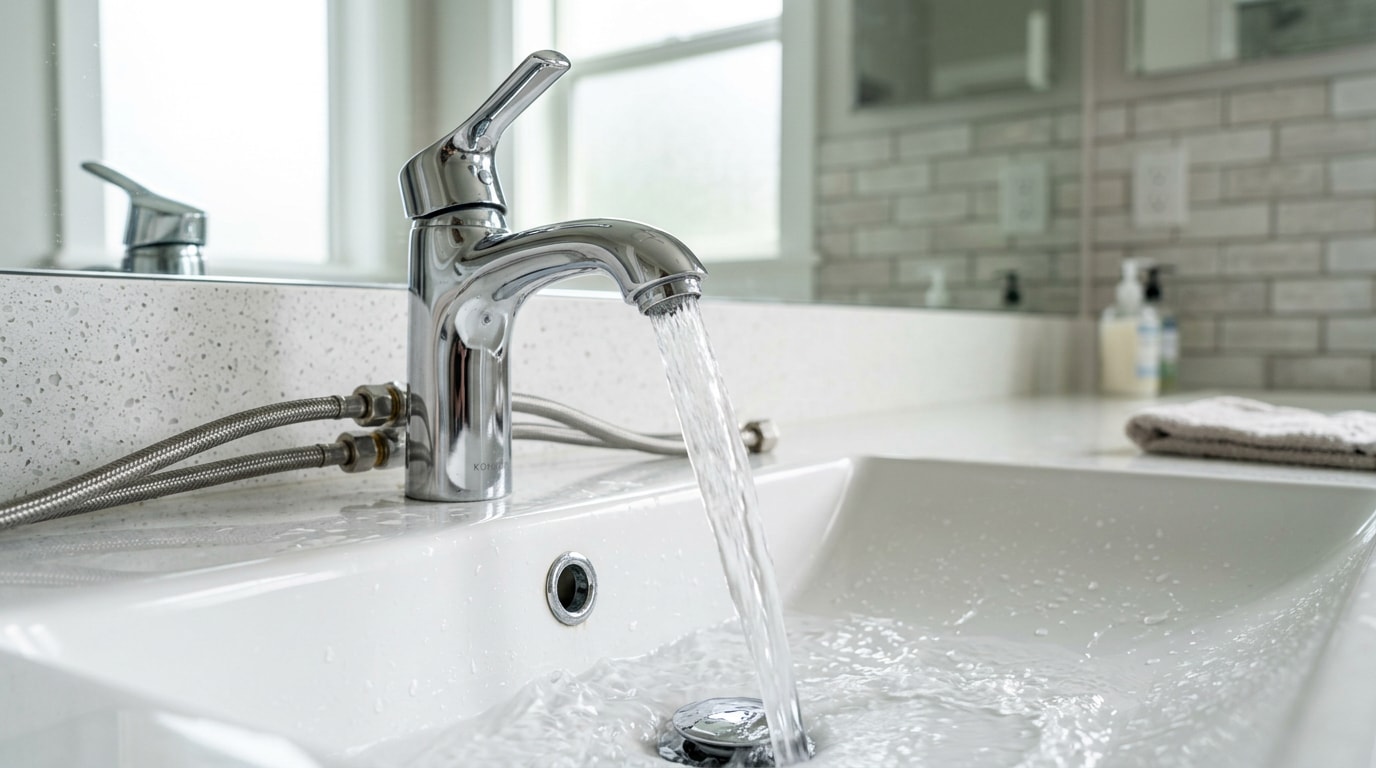
Before you touch a wrench, run the shower in the same bathroom. Then check a faucet in another room.
If those run normally and only the sink struggles, you're dealing with an isolated problem. Something contained to that one fixture's aerator, cartridge, or supply line is choking flow.
If every fixture in the house is weak, the cause lives upstream, in the main line, the pressure regulator, or (for well-supplied homes) the pressure tank or pump itself. Many properties around Mars and Adams Township sit on municipal water, but plenty of outlying homes in Cranberry, Forward, and Middlesex Townships still run on private wells, so this quick test matters more here than in a typical suburb.
For a broader look at how a whole system fits together, see our plumbing services overview.
Common Bathroom Sink Pressure Problems at a Glance
Match your symptom to the likely cause, then jump to the full breakdown below.
| Symptom | Likely Cause | Typical Fix |
|---|---|---|
| Low pressure, one sink only | Clogged aerator or worn cartridge | Clean or replace the part |
| Hot water only is weak | Sediment in water heater, hot-side valve | Flush heater, check valve |
| Sudden drop after cleaning under sink | Bumped shut-off valve | Reopen valve fully |
| Whole bathroom affected | Shared supply line issue | Inspect branch line |
| Whole house affected (city water) | Failing pressure regulator or main line | Call a plumber |
| Whole house affected (well water) | Waterlogged pressure tank or failing well pump | Check tank, call a plumber |
Causes of Low Water Pressure in a Bathroom Sink
Most bathroom sink pressure complaints trace back to one of these. Start with the first one. It's the most common by a wide margin.
Clogged Faucet Aerator
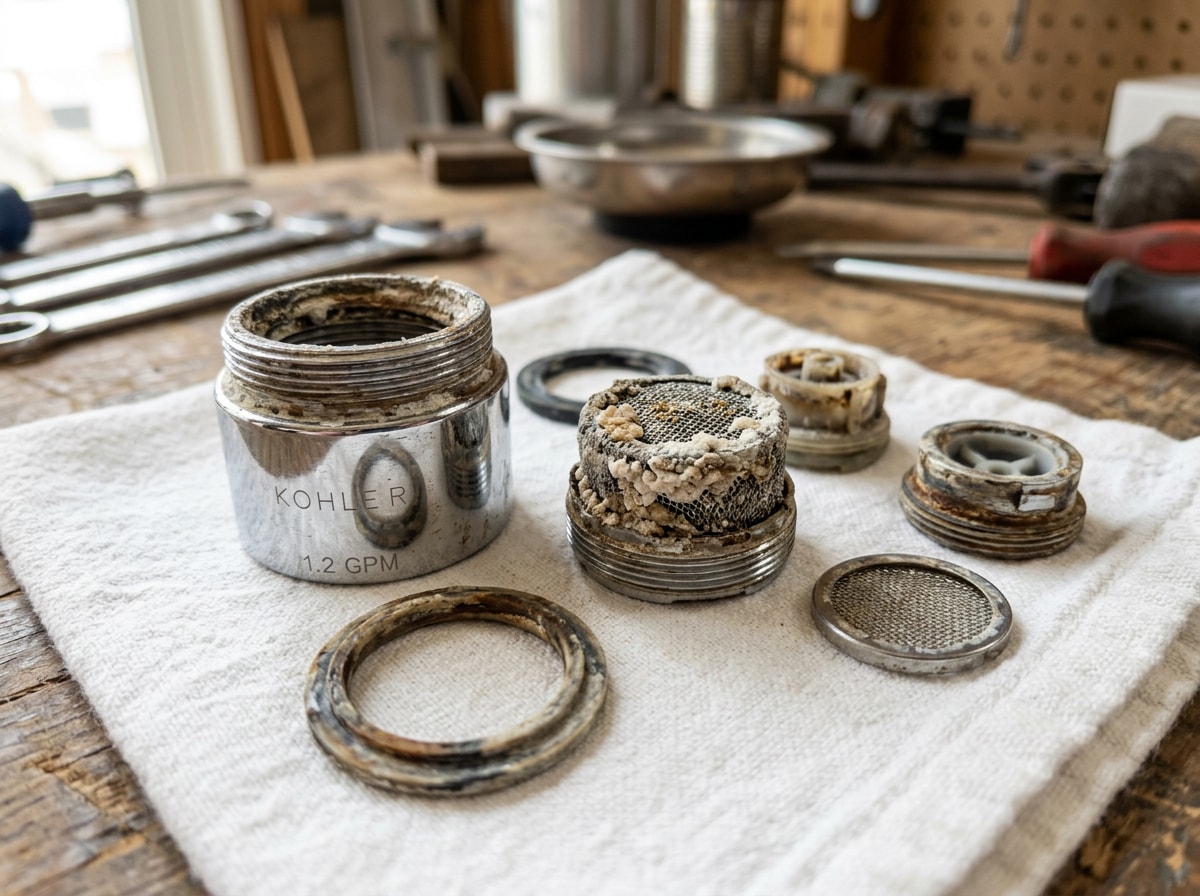
A clogged aerator is the single most common cause of low pressure in a bathroom sink. The aerator is the small mesh screen at the tip of the faucet, and mineral buildup collects there over time.
Unscrew it by hand or with pliers wrapped in a cloth, then run the water without it. If flow improves noticeably, you've found your answer.
Soak the screen in vinegar to dissolve deposits, or just replace it. New aerators cost a few dollars. Federal standards cap most lavatory faucets at 2.2 gallons per minute, while WaterSense-labeled aerators are built to use no more than 1.5 gpm, a 32% reduction — worth knowing before you assume a weaker-feeling aerator is defective rather than just efficient.
Partially Closed Shut-Off Valve Under the Sink
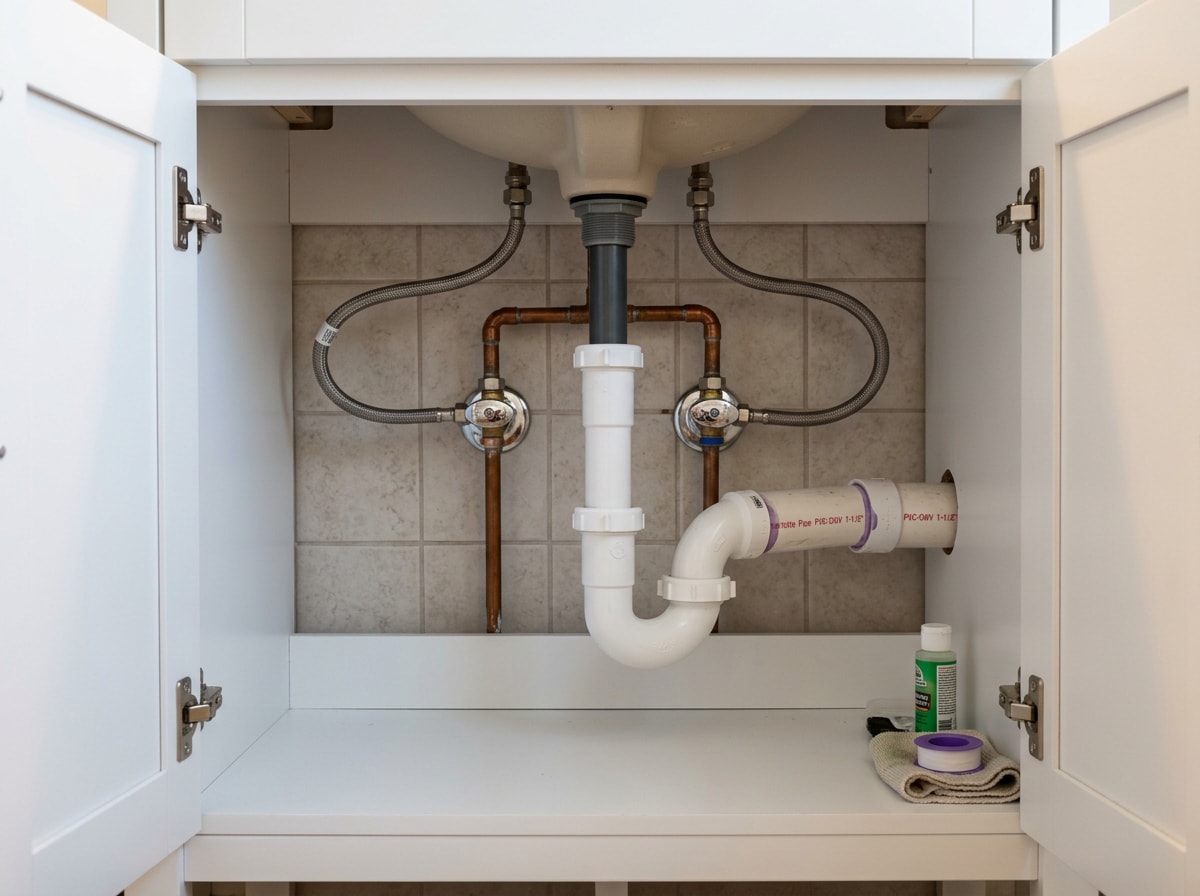
The angle stop under the sink gets bumped during cleaning or storage more often than homeowners realize. Even a quarter-turn toward closed noticeably cuts flow.
Open the cabinet doors and find the small oval or round handle. Turn it counterclockwise until it stops. This takes seconds and costs nothing, so rule it out before anything else.
Worn or Clogged Flow Restrictor or Faucet Cartridge
The flow restrictor is a small disc that limits water volume inside the faucet or aerator. The cartridge is a separate internal valve that controls flow and temperature mixing.
Either one can choke flow on its own. If cleaning the aerator didn't fix it, pull the cartridge next and check it for scale or damage.
Kinked or Clogged Supply Lines
The flexible lines running from the shut-off valve to the faucet can kink when boxes or trash cans get shoved under the sink for years. A kinked line restricts flow the same way a bent garden hose does.
Sediment also builds up inside these lines over time. If they're old or crusty at the connections, replacing them is cheap insurance.
Pipe Corrosion and Mineral Buildup
Older galvanized pipe narrows from the inside as scale and rust build up along the pipe walls. This happens over years, so it's easy to miss until pressure has dropped noticeably at the fixture farthest from the main line.
Water hardness is generally the amount of dissolved calcium and magnesium in water , and it varies a lot by well, aquifer, and municipal source even within the same county. Homes on older galvanized pipe in hard-water areas see faster scale buildup than homes already converted to copper or PEX. If you're weighing a repipe, our guide on why PEX plumbing gets a bad reputation covers what actually holds up long-term in this area.
Failing Pressure Regulator (PRV)
A pressure regulator controls how much pressure enters your home from the main line. A failing PRV causes dips that feel like a single-fixture problem but actually hit the whole house.
Where water pressure within a building exceeds 80 psi static, code requires an approved pressure-reducing valve to bring it back down to 80 psi or less . A regulator that's stuck, waterlogged, or simply worn out can swing the other direction and starve the house instead. If pressure fluctuates at multiple fixtures, not just the bathroom sink, have the PRV inspected. Our pressure regulator installation and pressure regulator repair teams handle both diagnosis and replacement.
Hidden Pipe Leaks
A leak elsewhere in the line pulls water away from the sink before it reaches the faucet. Signs include running-water sounds when nothing's on, a damp spot under a cabinet, or an unexplained jump in the water bill.
This isn't the most common cause of an isolated drop, but it's worth ruling out if the change was sudden. Our leak detection team can pinpoint it without tearing open walls.
Waterlogged Pressure Tank or Failing Well Pump (Well-Supplied Homes)
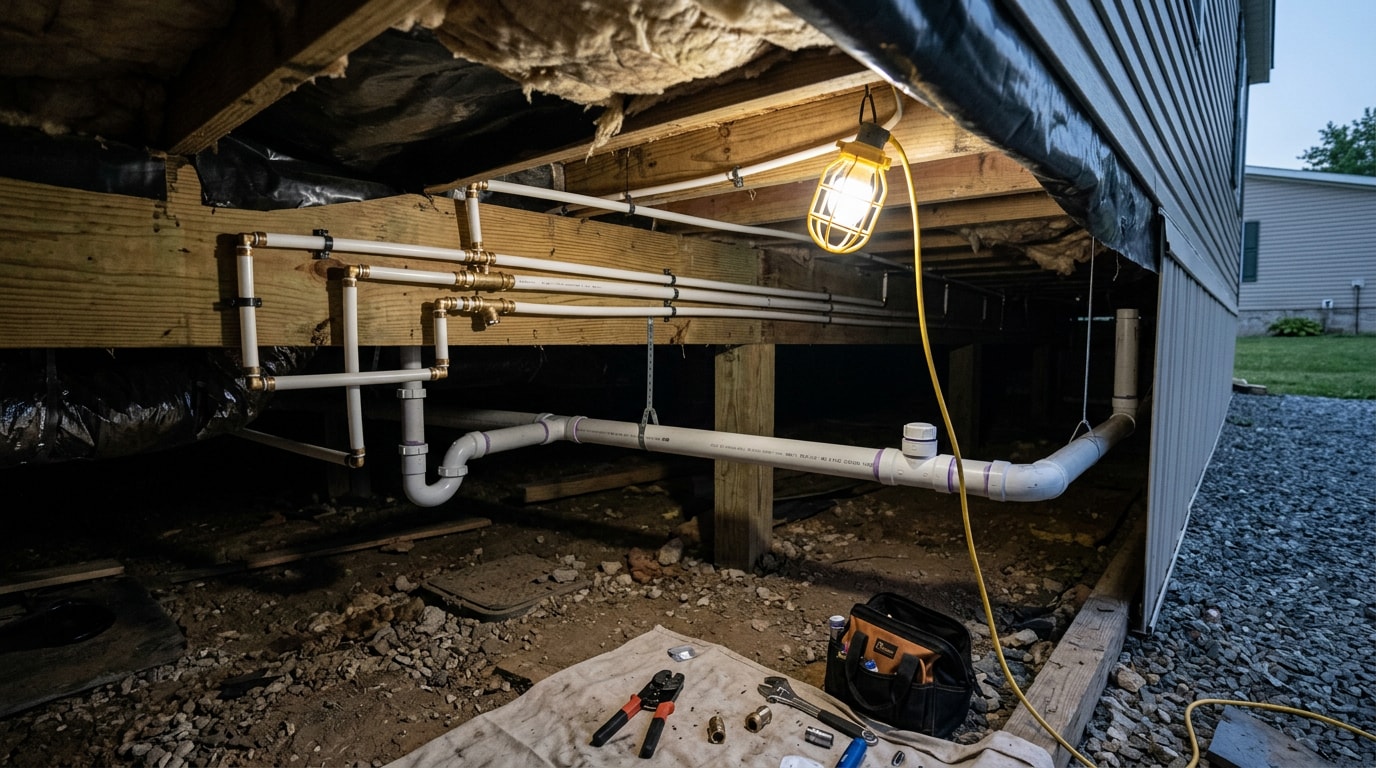
This is the cause most generic guides never mention, and it's a real issue for the well-supplied homes scattered around Mars, Cranberry, and the surrounding townships. If the whole house loses pressure, especially in a pulsing or on-off pattern rather than a steady weak flow, the pressure tank's air bladder may have failed, or the well pump itself may be struggling.
A waterlogged tank cycles the pump on and off rapidly instead of holding steady pressure between cycles. That shows up at every fixture, the bathroom sink included, as pulsing or surging flow rather than a clean trickle. Our well pump repair crews see this far more often in this service area than most plumbing content accounts for.
Step-by-Step Fixes for Low or No Water Pressure in a Bathroom Sink
Work through this list in order. Don't skip ahead.
- Confirm the shut-off valve is fully open. Takes seconds, costs nothing.
- Remove and clean (or replace) the aerator. Soak in vinegar or swap for a new one.
- Inspect the flow restrictor and cartridge. Clean mineral deposits or replace a worn cartridge.
- Flush the supply lines. Disconnect and run water through them to clear sediment, and replace if kinked or corroded.
- Check for leaks. Look under the sink and along visible pipe runs.
- If you're on a well and the whole house is affected, check the pressure tank. A rapidly cycling pump points to a waterlogged tank or a pump on its way out.
If you've worked through this list and pressure is still low, the issue sits further upstream than an aerator cleaning can fix. Our faucet repair team can take it from there, and if the whole house is affected, a plumbing inspection will find the actual source instead of guessing.
How Long Does This Actually Take?
Most aerator or valve fixes take just a few minutes once you know where to look. Cartridge replacement or swapping a supply line usually takes under an hour, even for a first-timer with basic tools.
Whole-home PRV repairs, pressure tank replacements, or repiping work are bigger jobs that call for a licensed plumber. Timelines depend on scope, anywhere from a single visit to a full day for larger repiping projects.
When to Stop Troubleshooting and Call a Plumber
Some signs mean the DIY list above isn't going to solve it:
- Pressure dropped suddenly with no recent cleaning or repair nearby.
- Multiple fixtures lost pressure at the same time.
- Water is pulsing or surging instead of flowing steadily (classic pressure tank symptom).
- You hear running water with every fixture off.
- Pressure is low only on the hot side, and flushing the water heater didn't help.
If you're dealing with any of these in Mars, Cranberry Township, Valencia, Wexford, or Warrendale, get a free estimate and we'll diagnose it on-site instead of having you guess at parts.
About This Guide
This guide is maintained by the licensed, insured plumbing technicians at Out of This World Plumbing Services, who field bathroom sink and whole-house pressure calls throughout Mars, PA and Butler County year-round. Questions about a specific symptom not covered here? Contact us directly.
FAQ
Why is my bathroom sink pressure low but the shower is fine?
This points to a fixture-level blockage, not a whole-home issue. Since the shower works normally, the main line and pressure regulator are fine. The problem lives in the sink's aerator, cartridge, or supply line.
Why is the hot water pressure low in my bathroom sink?
When only hot water runs weak, sediment buildup inside the water heater or a partially closed hot-side valve is the usual culprit. Check that the hot-side shut-off valve is fully open before assuming the water heater needs flushing. If it still runs weak, see our water heater repair page.
Can a bad cartridge cause low water pressure?
Yes. A worn or mineral-clogged cartridge commonly causes weak flow from both the hot and cold sides of a single sink, while other fixtures in the house stay unaffected.
Does low pressure in one sink mean I have a hidden pipe leak?
Not usually. A leak serious enough to meaningfully drop pressure at one sink would typically also cause visible water damage fairly quickly, so an aerator or cartridge issue is the more likely explanation for an isolated drop.
Should I replace the faucet if the bathroom sink pressure is low?
Rarely as a first step. Cleaning or replacing the aerator or cartridge solves most cases without touching the faucet itself. A full swap only makes sense if the fixture is very old, visibly corroded, or the cartridge housing is damaged beyond repair.
What's considered normal water pressure for a house?
Most homes run comfortably between 40 and 60 psi. Code sets 80 psi as the hard ceiling for static pressure, and anything above that requires a pressure-reducing valve. Below roughly 40 psi, you'll start noticing weak flow at multiple fixtures, not just the bathroom sink.
I'm on a well. Could the pressure tank be the problem instead of the sink?
Yes, and this is easy to miss. If pressure pulses or surges at every fixture in the house rather than running weak and steady, the pressure tank's bladder may be waterlogged or the well pump may be failing. That's a well pump repair call, not an aerator cleaning.