Why is PEX plumbing bad? In most Mars, PA homes, it isn't. But PEX does have real weak points: sunlight exposure, local water chemistry, rodents, and rushed installation work. Here's what actually causes PEX failures, and when the material is simply the wrong fit for your house.
Is PEX Plumbing Actually Bad?
PEX plumbing is not inherently bad. It's a durable, flexible plastic pipe used in most new homes, with situational weaknesses that matter more in some houses than others.
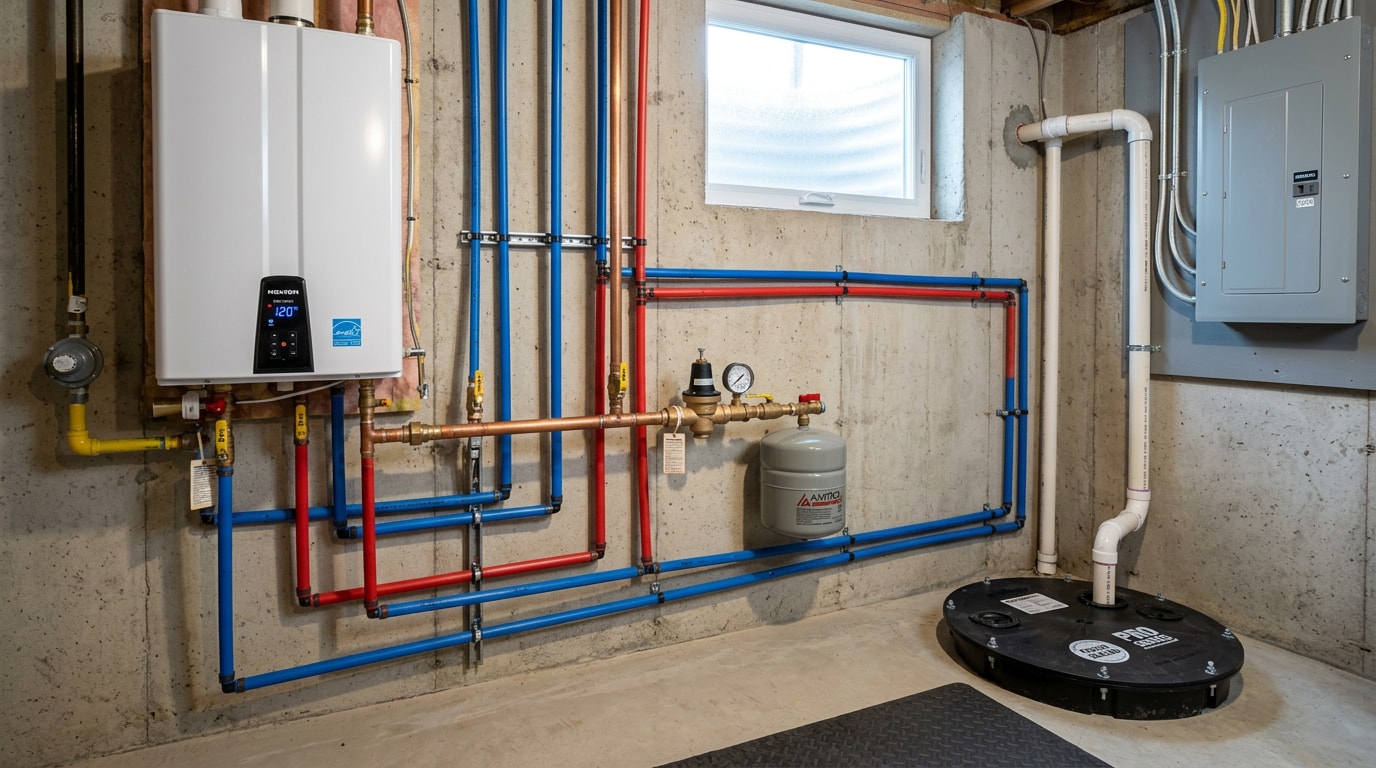
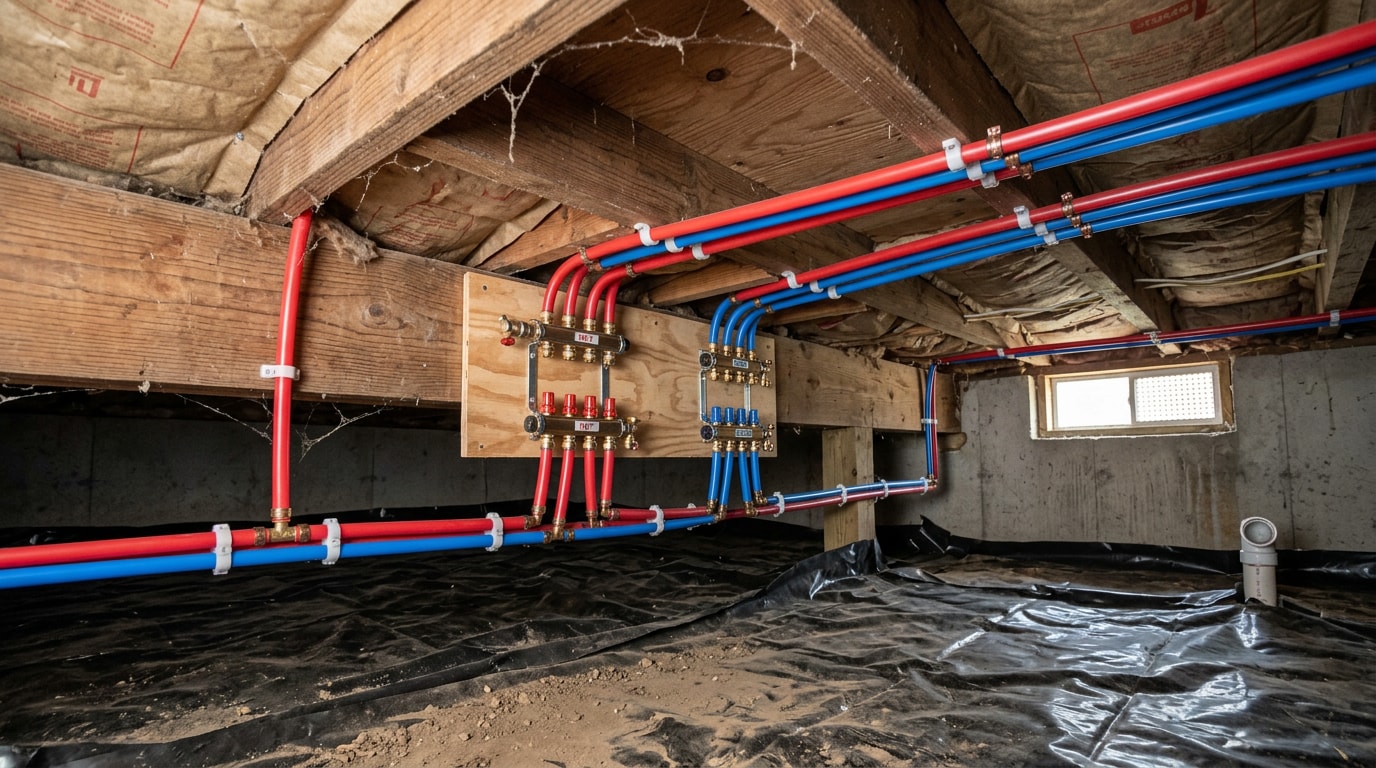
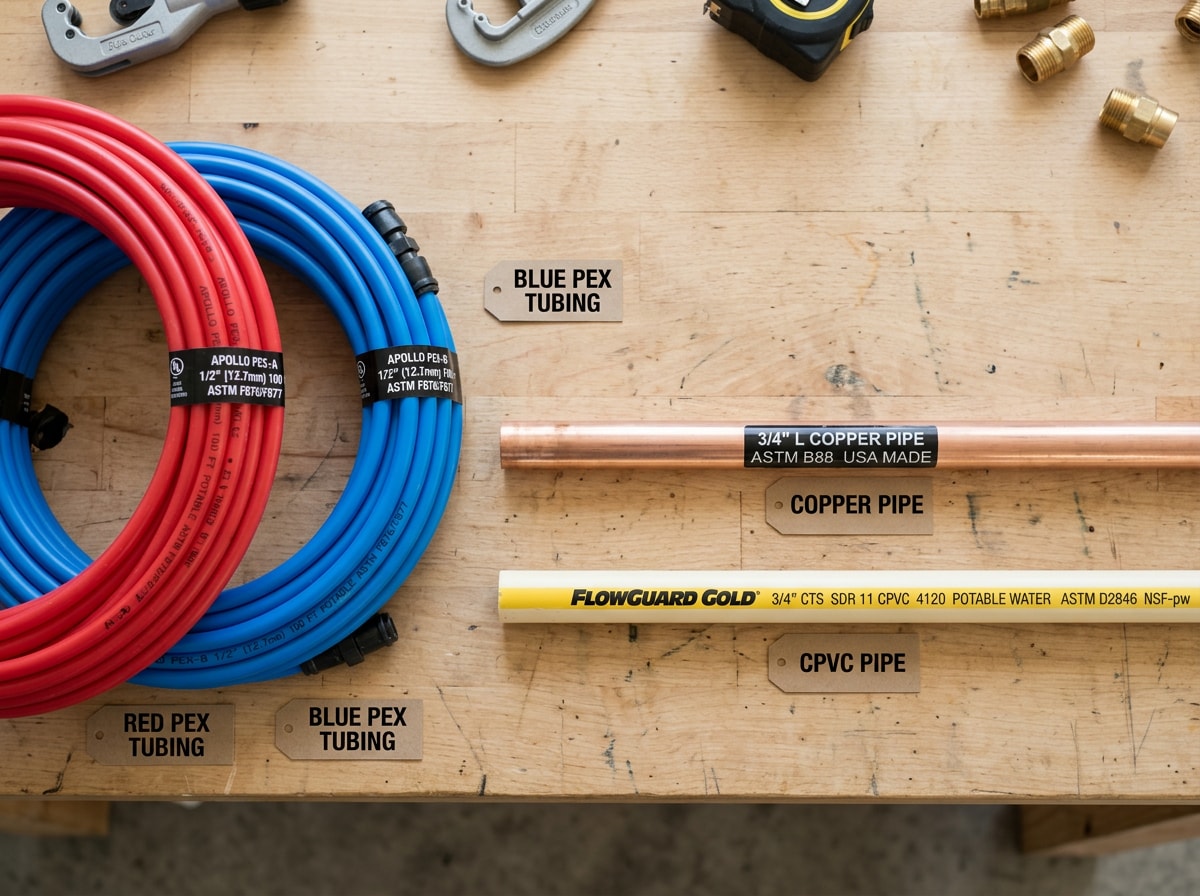
PEX stands for cross-linked polyethylene. It's a flexible plastic tubing that has largely replaced rigid copper and CPVC in new residential construction. It's color-coded (red for hot, blue for cold, white for either) and runs behind walls, under floors, and through crawl spaces.
Here's where the question gets interesting. Picture two homes a few blocks apart in Mars, PA. One has PEX run entirely through conditioned basement space, and that system will likely outlast the people living there. The other has a section left exposed in a sunlit crawl space vent, and within a few seasons that tubing turns brittle and cracks. Same material, very different outcome.
If you're planning a repipe or new construction project, our plumbing services team can walk you through which pipe material actually fits your home's layout and water conditions. You can also request a free estimate before any work starts.
What Are the Real Concerns About PEX Plumbing?
Most criticism of PEX falls into five buckets: local water chemistry, UV exposure, chemical leaching worries, rodent damage, and installation mistakes. None of these make PEX a bad material outright. Each one is a documented limitation worth asking about before a repipe or new build.
Chlorine and Local Water Chemistry
Chlorine resistance is one of the most-cited PEX weaknesses online, and it's not hype. Chlorinated water can accelerate oxidative breakdown in some PEX formulations over many years, which is exactly why ASTM F876 includes a chlorine-resistance rating as part of how PEX tubing is classified.
Butler County complicates this a bit. Some Mars-area homes run on municipal, chlorinated supply, while plenty of others pull from private wells with no chlorine at all but different mineral content instead. Neither situation makes PEX unusable, but it does mean your actual risk depends on your specific water source, not a generic national average.
If you're unsure what your water looks like, a water softener installation or well water review through our well pump repair service can flag conditions that shorten pipe life, whether you have PEX, copper, or CPVC.
UV Light and Sunlight Exposure Damage
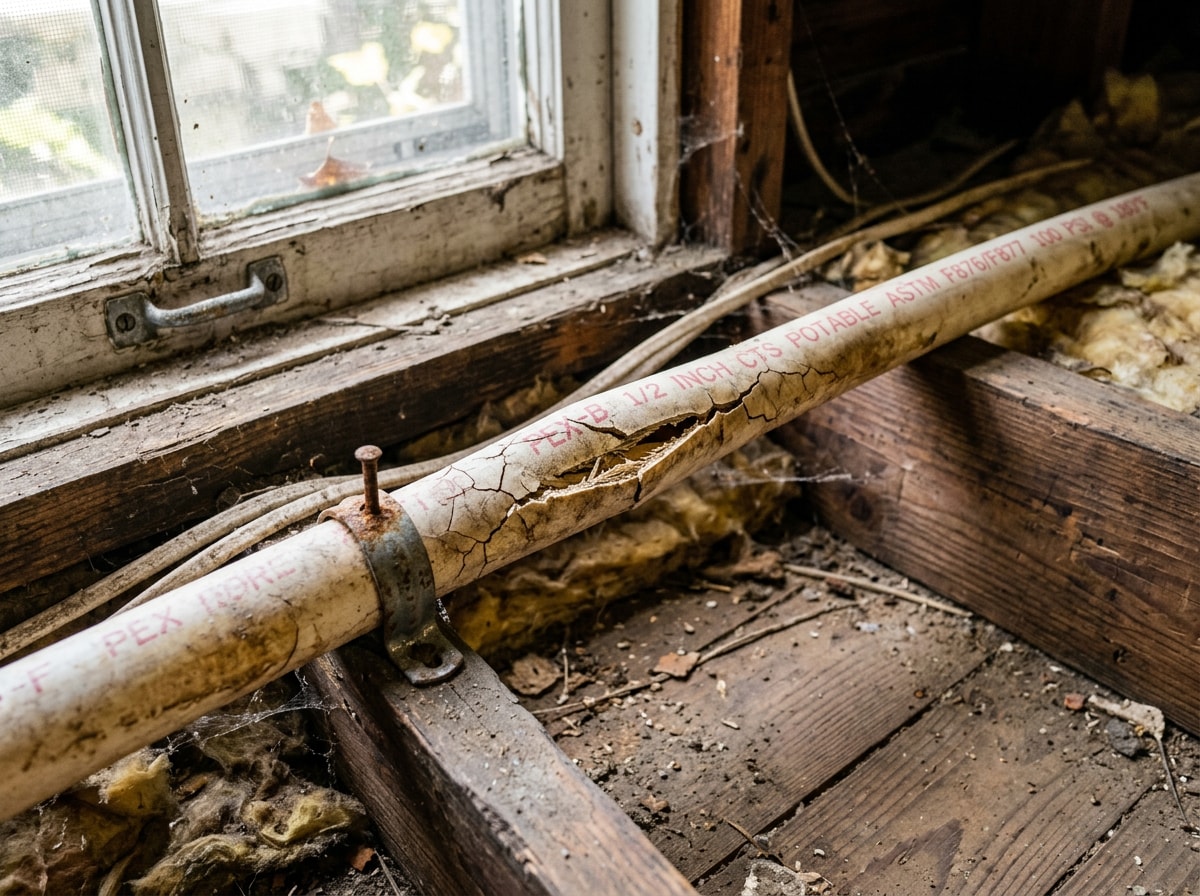
PEX tubing is not designed for prolonged sun exposure. Ultraviolet light breaks down the polymer chains, making the plastic stiff, discolored, and prone to cracking. Degradation can take anywhere from several months to a couple of years, depending on exposure intensity.
This shows up in attics with skylights, near uncovered windows, around outdoor hose bibs, and in crawl space vents where sunlight sneaks in longer than homeowners realize.
The Plastics Pipe Institute, the industry's own technical body, is blunt about it: PEX tubing and fittings should never be installed where they'll sit exposed to direct or reflected sunlight, and manufacturers publish specific maximum exposure time limits for every product line, as detailed in the PPI's UV labeling guidelines. That's the real-world standard contractors are supposed to follow, not a rumor.
Chemical Leaching and Drinking-Water Safety
Properly certified PEX pipe is considered safe for drinking water, though some homeowners report a temporary plastic taste or odor in new installations. That taste typically fades within the first few weeks of regular water flow.
The real safeguard is certification. Any PEX sold for residential plumbing in the U.S. should carry an NSF mark confirming it meets NSF International's NSF/ANSI 61 standard for drinking water system components. That standard specifically evaluates contaminants that could migrate from pipes, fittings, and other materials into the water supply. If you're ever unsure, checking for that certification stamp on the tubing is the fastest way to confirm.
Rodent Damage Risk
PEX's soft plastic composition makes it noticeably easier for mice and rats to chew through than rigid copper pipe. Unlike metal, PEX offers little resistance to gnawing, which can lead to slow leaks or sudden water damage if left undetected.
This typically happens in unfinished basements, crawl spaces, and attics, anywhere rodents already have access and PEX runs sit exposed rather than routed through walls. It's more common in older homes with existing rodent activity than in tightly sealed new construction.
Prevention is simple. Seal foundation gaps, keep crawl spaces dry, and consider protective sleeving on exposed runs.
Installation and Fitting Issues
A surprising share of PEX fitting failures trace back to the installation itself, not the pipe. Crimp rings that aren't compressed to the correct tension, mismatched tools, and mixing fittings between manufacturers are common mistakes that lead to slow leaks at connection points.
Crimp and clamp-style fittings require specific gauge tools to verify a proper seal. Skipping that verification step is one of the most frequent causes of callback leaks. In the service calls we run across Mars and Butler County, a cracked or leaking PEX connection almost always comes back to one of two things: a sun-exposed crawl space run, or a rushed crimp from a remodel job.
If your system was installed quickly or by an unlicensed installer, it's worth having the fittings inspected. Our pipe repair team can check connection points and catch slow leaks before they become drywall damage.
PEX vs. Copper and CPVC: A Quick Comparison
Choosing a pipe material usually comes down to weighing cost against durability. Here's how PEX, copper, and CPVC compare on the factors that matter most for a Mars, PA home.
| Factor | PEX | Copper | CPVC |
|---|---|---|---|
| UV resistance | Poor, degrades outdoors | Excellent | Moderate |
| Rodent resistance | Poor | Excellent | Good |
| Chlorine sensitivity | Rated by ASTM F876 class | Not applicable | Low, with proper cement |
| Chemical safety | Safe when NSF certified | Inert, very safe | Safe when certified |
| Typical indoor lifespan | 40-50 years | 50-70+ years | 40-50 years |
| Installed cost | Lowest, fewer fittings and less labor | Highest, requires soldering | Mid-range |
PEX wins on labor cost and installation speed since it doesn't require soldering, which matters in older homes with tight wall cavities. Copper remains the most durable option and is accepted under essentially every plumbing code in the country, including the International Plumbing Code published by the International Code Council, which has also recognized PEX as a code-accepted material for decades. CPVC splits the difference: more rigid and heat-tolerant than PEX, but still vulnerable to UV and impact damage over time.
PEX Failures and Lawsuits
Some PEX-related legal action has occurred, but most documented cases trace back to specific defective brass fittings from the 1990s and early 2000s, not the PEX tubing itself. Dezincification, a corrosion process in certain brass alloys, caused fitting failures in some older systems and led to class-action settlements involving particular manufacturers.
Current fitting manufacturing standards are considerably tighter than they were two decades ago. Certified products sold today go through more rigorous testing. If you're concerned about older fitting brands in your home, the U.S. Consumer Product Safety Commission's recall database is the place to check model numbers against actual recall records, rather than relying on general internet claims.
When Is PEX Actually a Bad Choice for a Mars, PA Home?
PEX becomes a poor fit in a handful of specific scenarios rather than across the board. Knowing these in advance helps avoid a costly repipe mistake.
- Homes with unprotected sunlit crawl spaces or vented attics. Hose bibs, detached garages, and aboveground outdoor runs shouldn't rely on standard PEX.
- Older farmhouses or barns converted to living space. Chronic rodent activity makes copper a safer bet for exposed runs in these buildings.
- Private wells with known aggressive or high-mineral water. A water test before repiping helps decide between PEX, copper, or a hybrid system.
- High-heat applications near equipment. PEX has lower heat tolerance limits than copper, which matters directly adjacent to certain fixtures.
If your home checks one of these boxes, that's a reasonable moment to ask your plumber about mixing materials rather than defaulting to PEX everywhere.
Is PEX Plumbing Bad for Your Home? The Verdict
PEX isn't a bad material. It performs reliably for most interior supply-line applications when installed correctly by a licensed plumber. The failures that make headlines almost always trace back to poor installation, uncertified products, or the wrong application, not the tubing itself.
For homeowners in Mars, PA weighing a repipe or new construction decision, the right call depends on your home's layout, water source, and whether any of the scenarios above apply. A qualified plumber should walk through those factors with you rather than defaulting to one material for every job. Our guide on plumbing and sewer repair in Mars, PA covers related pipe issues worth knowing before you commit to a repipe.
If you'd like a straightforward assessment of your plumbing setup, visit our homepage to see our full service area, or explore pipe replacement options if a repipe is already on the table. Ready for a second opinion? Request a free estimate and we'll take it from there.
FAQ
Why don't plumbers like PEX?
Some plumbers hesitate on PEX because of UV sensitivity, rodent vulnerability, and the fact that fitting failures often trace back to installation errors rather than the material itself. These are manageable concerns with proper installation and placement, not reasons to avoid PEX entirely.
Is PEX pipe safe for drinking water?
Yes. PEX certified to NSF/ANSI 61 standards is considered safe for drinking water. That certification confirms the tubing has been tested for chemical leaching and meets potable-water safety requirements. Always confirm the certification marking is present on any PEX installed in your home.
How long does PEX pipe last?
PEX typically lasts 40 to 50 years indoors under normal conditions. Water chemistry matters, though. High chlorine levels, aggressive well water, or unusually hard water can shorten that lifespan, while well-maintained systems with balanced water often reach the higher end of that range.
Is PEX or copper better for Mars, PA homes on well water?
It depends on what's in the well water. Low-pH or mineral-heavy water can be hard on both materials in different ways. A water test is the fastest way to know, and our well pump repair team can help you assess your source before you commit to a pipe material.
Should I worry about old PEX fitting lawsuits or recalls?
Only if your home has older brass fittings from the affected manufacturing era, roughly the 1990s through early 2000s. Current certified fittings go through tighter testing. Checking model numbers against the CPSC's recall database settles the question faster than guessing.