Escutcheon plumbing in Valencia, PA comes down to one small part: the metal or plastic ring that hides the hole where a pipe passes through your wall or floor. Most homeowners never learn its name until a faucet swap or a mystery drip forces the question. This guide covers what the part does, why Butler County's water makes it worth a second look, and when the job is a quick DIY fix versus a call to a licensed local plumber.
What Is an Escutcheon in Plumbing?
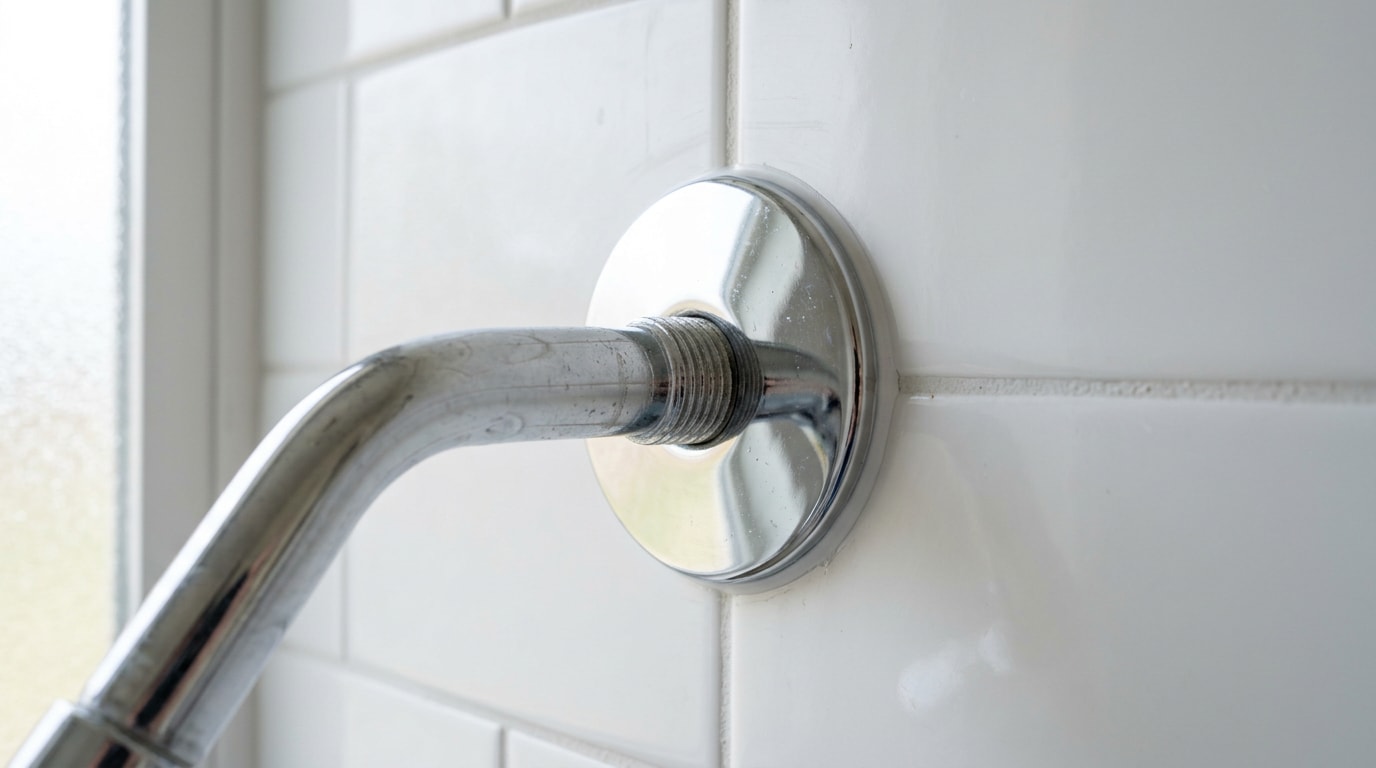
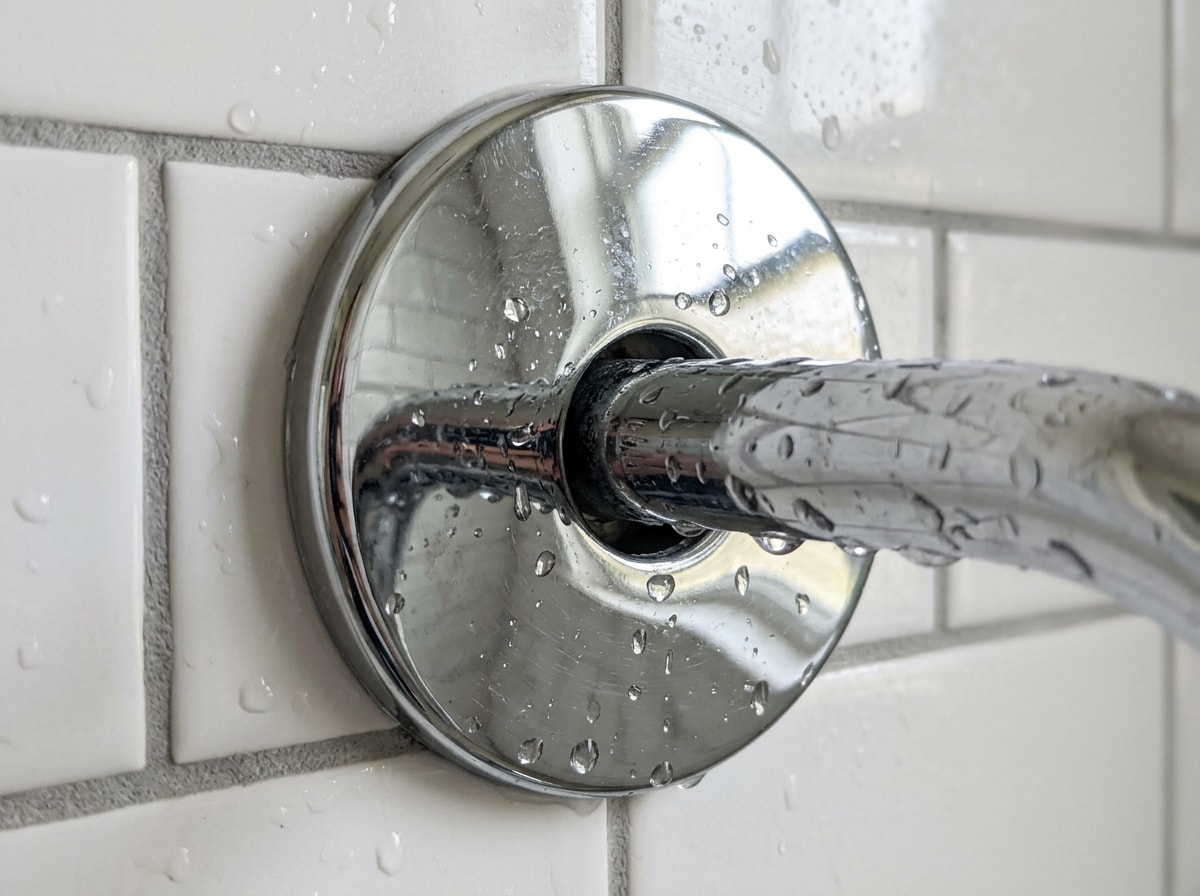
An escutcheon is a decorative plate installed behind a faucet, showerhead, toilet, or sink supply line to cover the hole where a pipe or valve passes through a finished wall or floor. It conceals rough plumbing penetrations and protects the surrounding surface from moisture and wear.
You might also hear it called a flange, trim plate, or cover plate. These terms are mostly interchangeable, and which one a supplier or plumber uses often just comes down to region or catalog habit.
Plumbing codes generally require these pipe openings to be sealed once a wall or floor is finished. The International Plumbing Code specifically requires that the annular space between the pipe and the sides of the opening be sealed with caulking materials or closed with gasketing systems compatible with the piping materials and locations . An escutcheon, paired with caulk, is usually how that requirement gets met in a finished bathroom.
Where Escutcheons Show Up in a Valencia Home
Escutcheons show up almost anywhere a pipe meets a finished surface:
- Behind faucets and at shower arms
- Around toilet supply lines and shutoff valves
- Under bathroom or kitchen sinks
- Near water heater connections
- At outdoor hose bibs, to keep insects and moisture out
If you're working through a fixture list for a remodel, it's worth checking every one of these spots, not just the obvious showerhead.
Why Local Water Conditions Make Escutcheons Worth a Second Look
Most national plumbing guides stop at "it's decorative." In our service calls across Valencia and the surrounding Butler County towns, we routinely find scale-crusted or corroded escutcheons at supply stops and shower arms well before a homeowner notices any other sign of a problem.
Water sources around Valencia vary by street. Valencia Borough's own records list the Richland Township Municipal Authority as the local water provider, 61 Almira Street, Valencia, PA 16059 , while plenty of nearby homes still run on private wells. Groundwater across Butler County commonly runs moderately hard, and hardness deposits tend to collect first at fixture connections, exactly where an escutcheon sits.
That buildup shows up as white or greenish crust on the plate, and in some cases it contributes to the escutcheon loosening against the wall or floor. A loose, corroded plate isn't just cosmetic. The EPA notes that the key to mold control is moisture control, and if mold becomes a problem, you need to clean it up and fix the water problem . A gap behind a shower escutcheon is exactly the kind of small, overlooked moisture path that feeds that problem over months.
If hard water scale is a recurring issue in your home, it's often worth pairing a fixture upgrade with a look at water softener installation rather than just replacing the trim piece every couple of years.
Types of Escutcheon Plates
Not every escutcheon fits every pipe, and grabbing the wrong one at the hardware store is a common DIY mistake. The basic designs are:
- One-piece (solid) plates – slide over a pipe before the fixture is installed; most secure fit
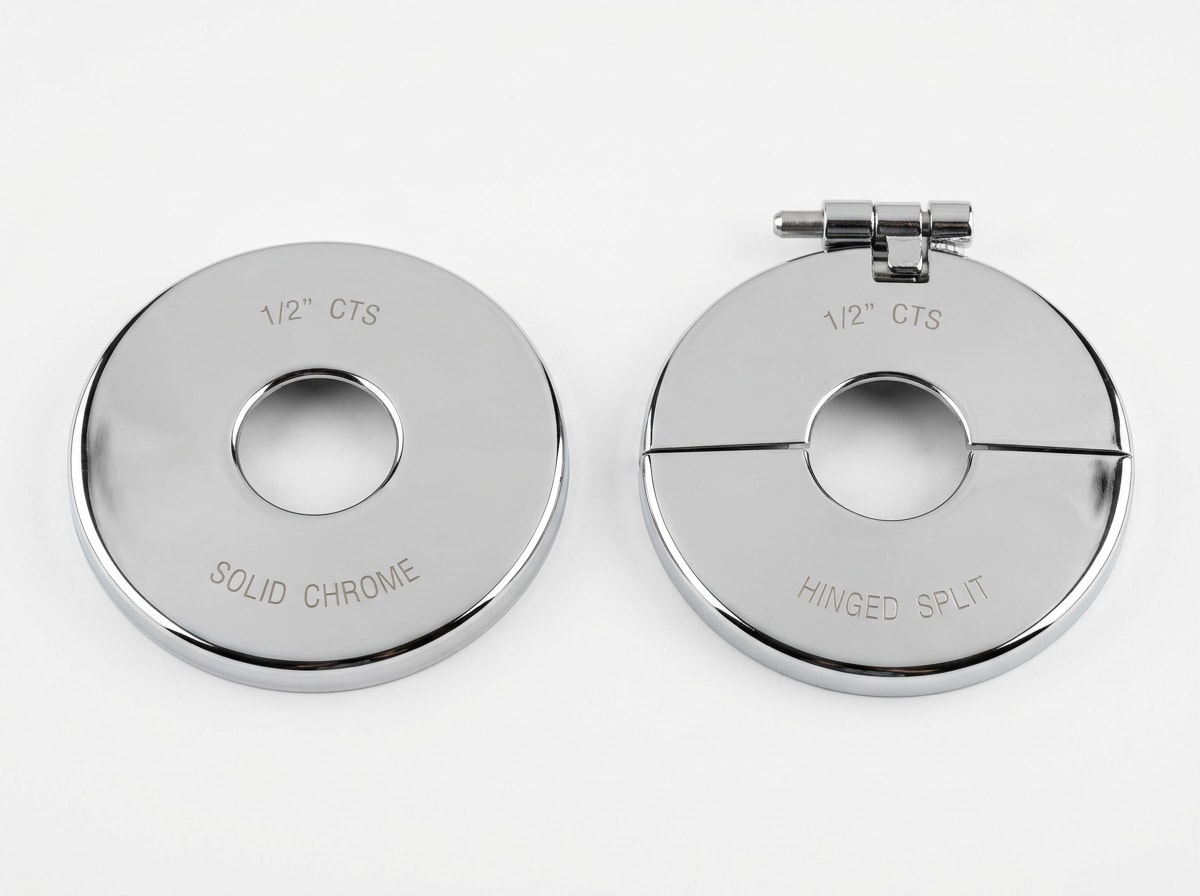
- Split-ring plates – snap open and close around a pipe that's already in place; useful for repairs without disconnecting the fixture
- Oversized or custom plates – cover a larger gap left behind when a new fixture's base is smaller than the old one
- Decorative finishes – chrome, brushed nickel, oil-rubbed bronze, and matte black, matched to the fixture above
Sizing comes down to pipe diameter and how much extra coverage you need. A standard ½-inch supply stop escutcheon, for example, is built around a fixed inside diameter that matches the stub-out, as shown in manufacturer specs for BrassCraft's standard ½-inch escutcheons, which note the part is used to conceal the hole in the wall or floor around the water supply pipe .
| Type | Best For | Typical Cost* |
|---|---|---|
| One-piece slip-on | New installs | $3–$10 |
| Split-ring (hinged) | Repairs without disconnecting the fixture | $5–$15 |
| Oversized or custom | Covering a gap left by an old fixture | $10–$30 |
| Decorative finish (nickel, bronze, matte black) | Matching upgraded fixtures | $15–$40 |
*Prices are general hardware-store ranges and vary by brand and finish.
Escutcheon Plate vs. Faucet Deck Plate
An escutcheon plate generally covers a pipe, valve, or fixture opening in a wall or floor, while a faucet deck plate is specifically installed beneath a deck-mounted faucet to cover extra holes in a sink or countertop. Escutcheon is the broader term; it covers shower valves, faucets, supply pipes, and other plumbing penetrations, while a deck plate serves one narrow purpose.
If a supplier asks which one you need, think about the surface: covering a wall or floor penetration means escutcheon, covering extra countertop holes behind a faucet means deck plate.
How to Remove and Replace an Escutcheon
Most escutcheon swaps are straightforward DIY jobs. A few situations call for a professional instead. Replacement should address why the old plate failed or looked worn, not just the visible cosmetic issue. That's the difference between a quick fix and one that actually lasts.
Hard-to-Reach Escutcheons Behind Shutoff Valves
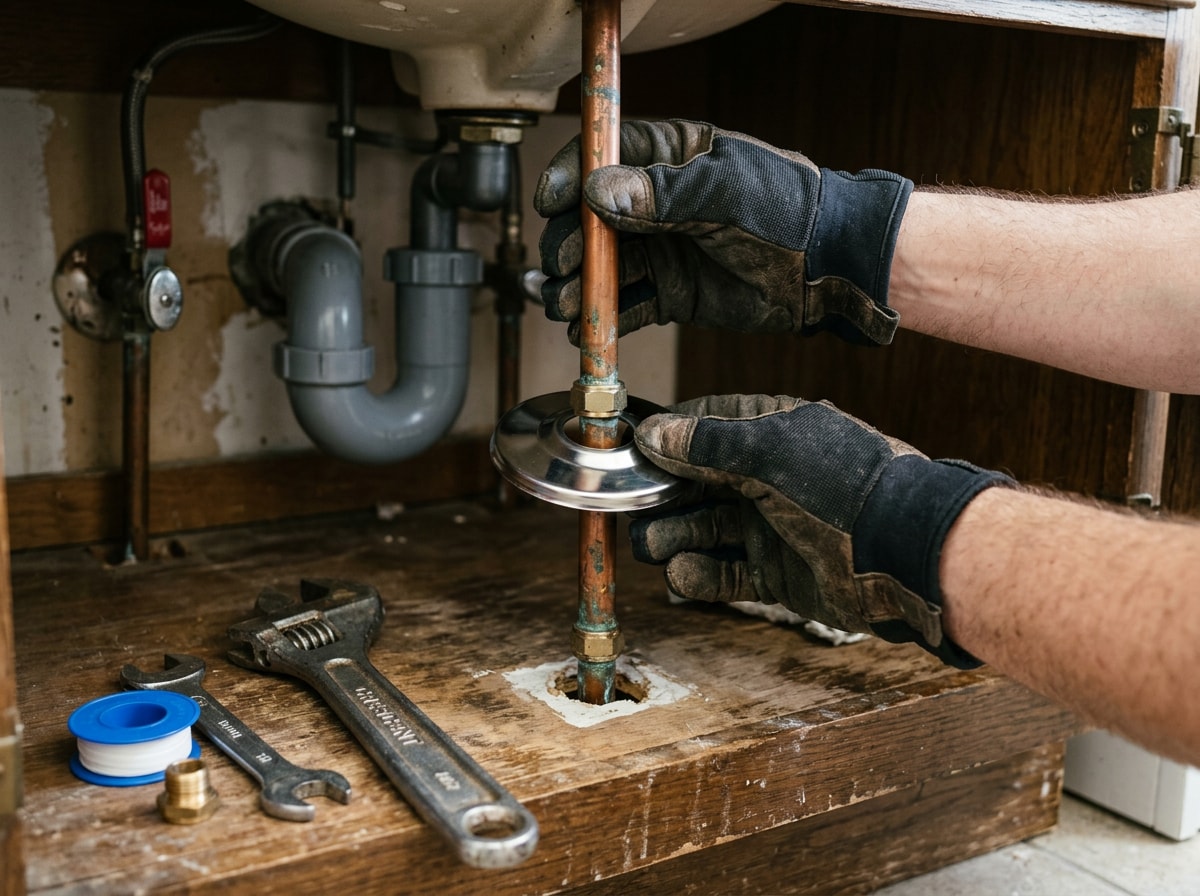
Escutcheons behind a toilet or under a sink are trickier because a shutoff valve often blocks the way. The valve has to come out before the plate will slide free, which means working with water supply lines instead of just a decorative cover.
If the shutoff valve is soldered to the pipe rather than connected with a compression fitting, stop there. Soldered valves require sweating a new joint, which carries real risk of a leak or scorched surfaces if it's not done correctly. That's a reasonable point to call a plumber rather than push forward.
Installing the New Escutcheon
Once the old plate and any blocking valve are clear, fit the new escutcheon flush against the wall or floor:
- Slide or snap the new plate into place over the pipe
- Secure it with small screws or the built-in snap-fit edge, depending on the style
- Reinstall the shutoff valve or fixture if it had to come out
- Caulk the edge where the plate meets tile or drywall to maintain the seal
Match the new plate's finish to the fixture, chrome, brushed nickel, or oil-rubbed bronze, so the trim doesn't clash with the faucet or showerhead above it. A mismatched finish is a small detail, but it's the kind of thing that stands out in a finished bathroom.
When to Call a Licensed Plumber Instead
Call a professional if you notice any of the following:
- The shutoff valve is soldered rather than compression-fit
- Water is actively dripping or staining the wall around the escutcheon
- The pipe behind the plate shows green or white corrosion
- You suspect the leak has already reached the subfloor or wall cavity
If you're already dealing with a drip near a fixture, our plumbing leak repair guide for Valencia homeowners walks through what a repair typically involves before you start pulling trim plates. For anything beyond a simple swap, contact Out of This World Plumbing Services for a free estimate before the leak spreads further.
FAQ
Do I Need a New Escutcheon with My New Fixture?
Not always, but it's often worth it. An older escutcheon can look worn or clash with a new faucet or showerhead's finish. Replacing it is optional, but a new plate can noticeably improve the overall look of the bathroom.
What Is the Purpose of an Escutcheon?
An escutcheon covers the rough hole where a pipe or valve passes through a wall or floor. It creates a finished appearance, shields the surface edge from moisture, and closes gaps that could otherwise let in pests, drafts, or water.
Can a Homeowner Replace an Escutcheon or Trim Plate?
In most cases, yes. Simple slide-on or split-ring swaps are generally DIY-friendly projects that don't require special tools. If the job involves a soldered valve, a suspected leak, or any structural concern behind the wall, it's safer to call a licensed plumber rather than risk a bigger repair.
What's the Difference Between an Escutcheon and a Flange?
In plumbing, these terms are used interchangeably most of the time. Both describe the trim plate that covers a pipe or valve opening at a finished surface, though "flange" tends to be the more common term at floor-mounted fixtures like toilets.
Why Is Water Getting Behind My Shower Escutcheon?
A cracked, loose, or poorly caulked escutcheon can let moisture track behind the tile and into the wall cavity over time. The EPA warns that mold spores need moisture to grow, and a problem won't resolve on its own until the water source is fixed. A loose plate is worth sealing or replacing promptly rather than waiting for a bigger repair.
How Much Does It Cost to Replace an Escutcheon Plate?
Standard chrome or plastic plates typically run $3 to $15 at a hardware or plumbing supply store. Oversized, custom, or decorative finishes can run $15 to $40. Professional installation adds a service call fee if the swap involves removing a shutoff valve.
Do I Need a Plumber for a Simple Escutcheon Swap?
No, most shower-arm or exposed-pipe escutcheons are a five-minute DIY task. You only need a plumber when a valve has to be removed, the connection is soldered, or there's an active leak behind the wall.
Escutcheon plates look like a minor finishing detail, but in a Butler County home they're also a quiet early-warning sign for scale buildup and slow leaks. If you're updating fixtures or just noticed a stained, loose plate during a bathroom project, the team at Out of This World Plumbing Services serves Valencia, PA and the surrounding area. Get a free estimate before a small trim-plate problem turns into a wall repair.