A bathroom sink leaking underneath in Valencia, PA is almost never a one-time accident. Something in the supply lines, drain assembly, or basin has worn down enough to let water escape, and it's usually been happening longer than you think. This guide walks through the real causes, which fixes you can do yourself, what repairs typically cost, and when it's time to call a professional.
Is a Bathroom Sink Leaking Underneath Dangerous?
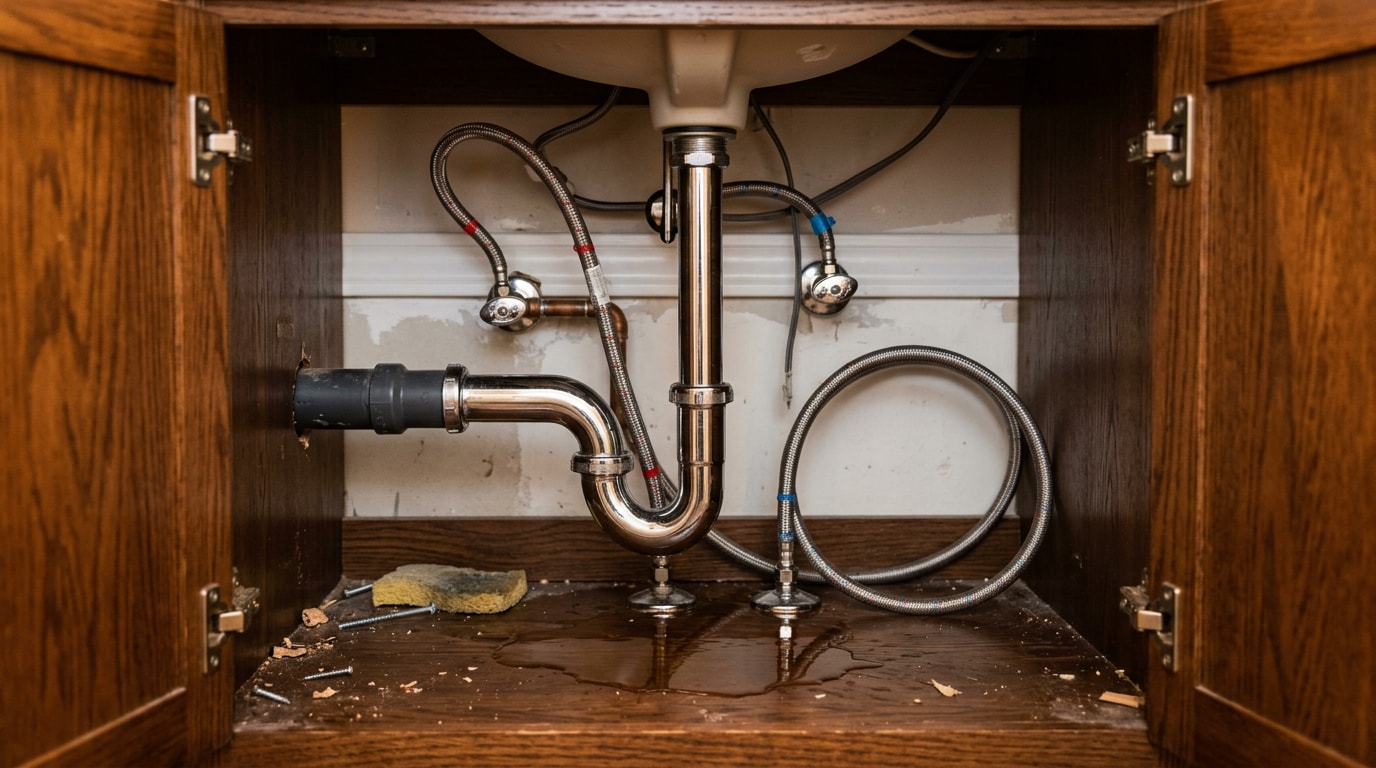
Yes. Because the plumbing sits inside a closed vanity, a leak here can do more damage than one you can see right away.
A bathroom sink typically only leaks while it's in use, so a small drip might only show up during the morning rush and dry out of sight by evening. Moisture trapped behind cabinet walls doesn't need much time to turn into a real problem. The EPA's guide to mold and moisture notes that indoor moisture left unchecked is a primary driver of mold growth in homes, and a vanity cabinet is exactly the kind of dark, damp, low-airflow space mold prefers.
If you've already noticed soft spots, discoloration, or a musty smell under the sink, don't wait it out. Our leak detection team serving Valencia, PA can usually pinpoint the source in a single visit, before it turns into a rotted cabinet floor.
Common Causes of a Bathroom Sink Leaking Underneath
Most under-sink leaks trace back to one of five spots: the water supply hoses, the P-trap, the drain flange, the sink basin itself, or general wear in an older home's plumbing.
Before you reach for a wrench, do a quick diagnostic pass. Wipe everything under the sink dry with a towel, run water, and watch each connection with a flashlight. Wherever it gets wet first is almost always your source.
Water Supply Hose Leaks
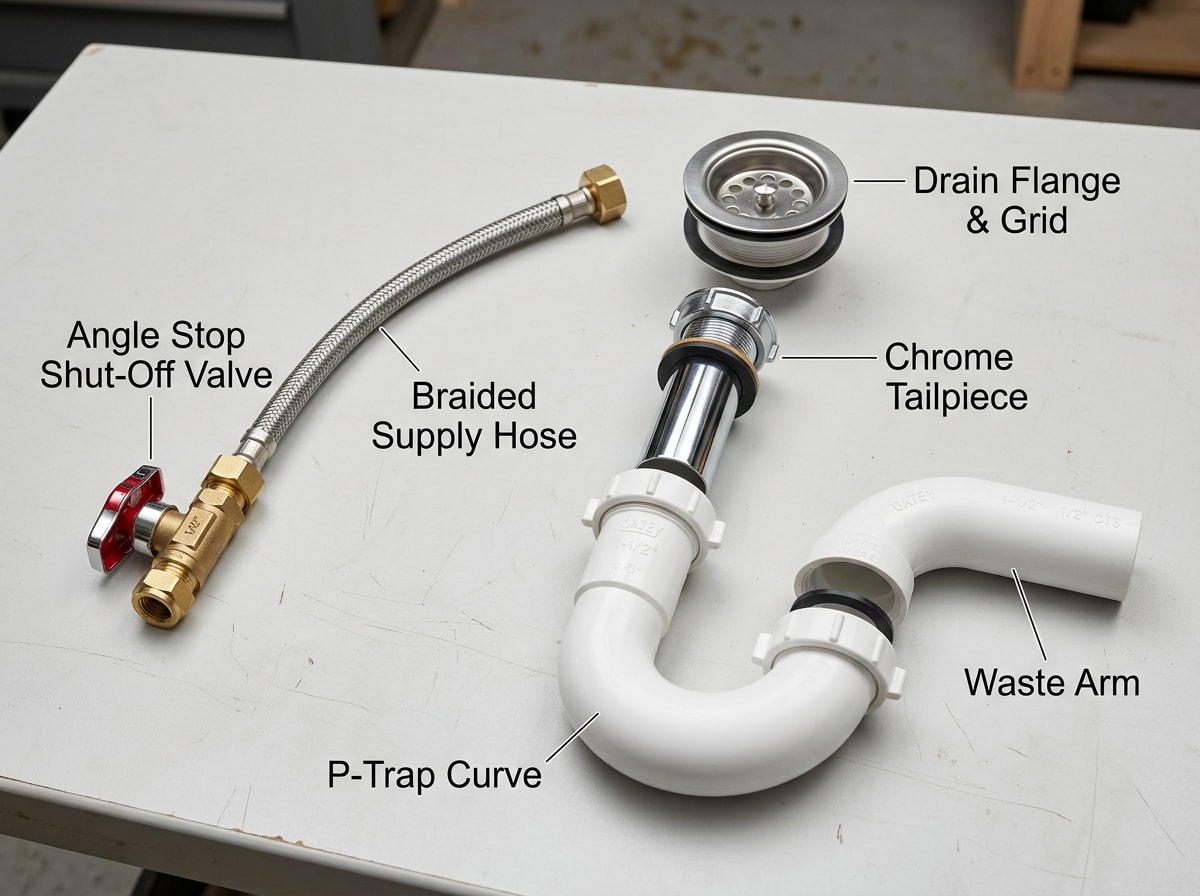
If the seal on a supply hose has broken down, water pools beneath the sink every time the shut-off valve is open. Mineral buildup inside the hose is a frequent culprit, since it slowly corrodes fittings until they leak.
Many Valencia-area homes run on private wells, and county-level water testing classifies Butler County groundwater as moderately hard. That mineral load adds up inside supply lines over the years. Once a hose has been replaced, a whole-house water softener is often the longer-term fix that keeps the next hose from failing the same way.
P-Trap Leaks From Loose Connections
The P-trap is the curved section of drain pipe just below the basin. Its job is to hold a small amount of water that blocks sewer gas from backing up into your bathroom, so a loose connection here is both messy and worth fixing promptly. Standard plumbing codes require every fixture trap to maintain that water seal specifically to keep sewer gas out of living spaces, a principle IAPMO's code commentary traces back to the earliest modern plumbing systems.
Most P-trap leaks come from a loose slip nut that's worked itself free over time. Try tightening it by hand first, then with an adjustable wrench if needed.
Drain Flange Leaks
The drain flange is the metal ring that seals the drain opening to the basin. A loose flange produces a slow, steady drip. Old plumber's putty, corrosion, or physical damage can all break that seal.
If tightening the flange doesn't stop the leak, or it looks corroded or damaged, that's a sign to call a plumber rather than force it. A cracked or stripped flange can damage the basin further if someone unfamiliar with the part tries to remove it. A faucet repair technician can also rule out whether the drip is actually coming from the faucet connection above and only appearing to leak at the flange.
Cracked Sink Basin Leaks
A hairline crack in the basin often starts small, leaking only when the sink is full or used heavily. It's easy to miss until water damage shows up on the cabinet floor below. Left alone, these cracks tend to widen.
Why Older Valencia Homes Leak More Often
Valencia and the surrounding Butler County area still have plenty of farmhouse-era and mid-century homes where the original plumbing hasn't been fully updated. In these houses, an outdated supply line or a tailpiece that's never been replaced can slowly start leaking without any single obvious cause. If your home fits that description, it's worth having a pipe repair specialist check the under-sink plumbing even before a leak shows up.
How to Fix a Bathroom Sink Leaking Underneath
Several of these repairs are realistic DIY jobs with basic tools. If a fix doesn't hold or a part looks damaged, a plumbing leak repair request is the safer next step.
Leak at the Drain Body
- Tighten the retaining nut with an adjustable wrench or slip-joint pliers.
- If it still leaks, unscrew the nut, slide the pivot rod out of the drain body, and replace the worn washer or gasket inside.
- If the lift mechanism itself is badly worn, replace the whole drain body and pop-up assembly rather than patching individual parts.
Leak at the Tailpiece
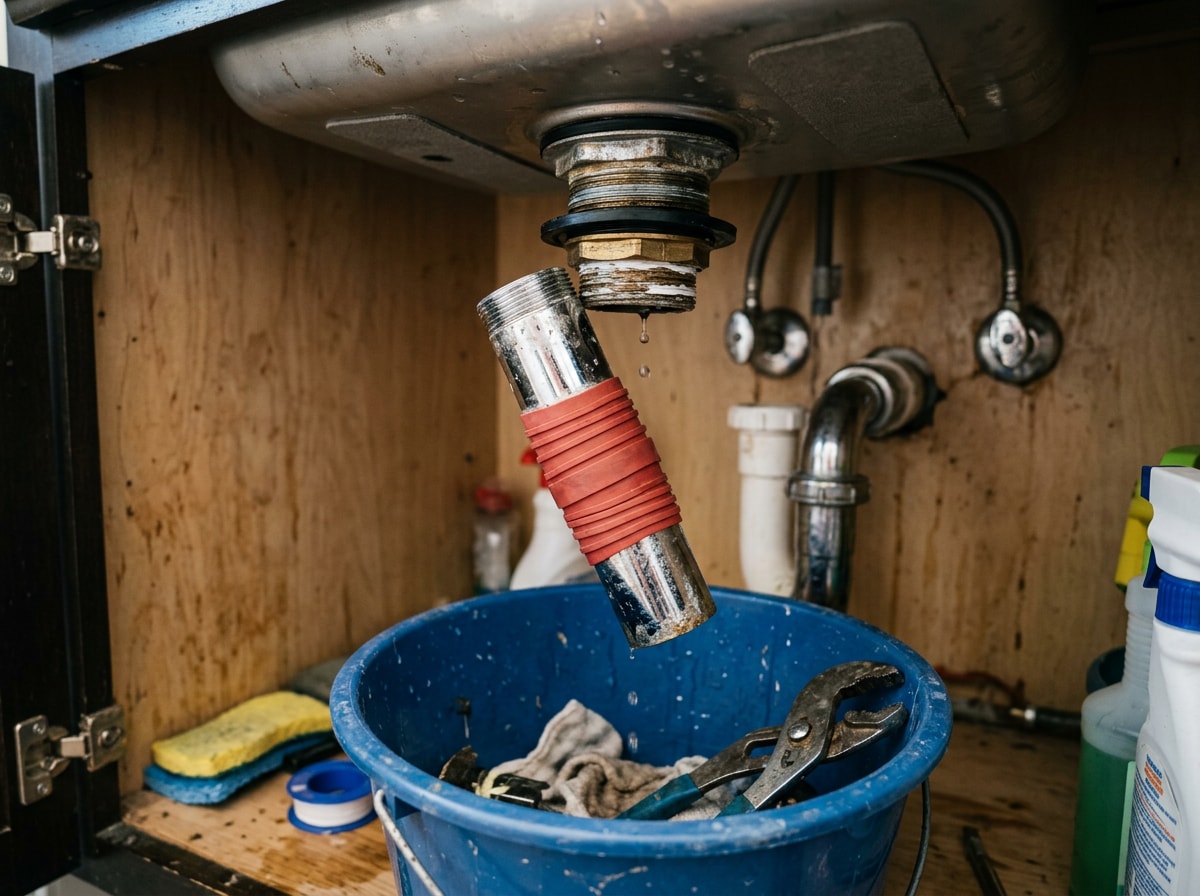
- Unscrew the tailpiece by hand if you can. It's often brass and crushes easily under a wrench.
- Slip a wide rubber band around it first for a better grip without tools.
- Most tailpiece leaks come from loose connections or a worn joint rather than a cracked pipe, so fresh plumber's tape on the threads before reassembling is often enough to stop it for good. Home Depot's step-by-step strainer guide covers the putty-and-washer process in more detail if you're working on the flange at the same time.
Epoxy Patch vs. Sink Replacement: Cost Comparison
Deciding between a quick patch and a full swap comes down to where the crack is and how old the sink already is.
| Repair Option | Typical Cost | Time | Best For |
|---|---|---|---|
| Epoxy patch kit | $15–$40 | About 30 minutes | A hairline crack away from the drain, on a basin that's otherwise sound |
| Sink replacement, installed | $150–$600 | 2–4 hours | A crack near the drain flange, a widening crack, or an old, worn basin |
An epoxy patch holds up well for a year or more when applied correctly, but it's a patch, not a repair. A crack near the flange or one that's visibly spreading usually comes back. Replacement costs more up front but removes the risk of the patch failing again later.
When to Call a Local Plumber
Tightening a slip nut or swapping a washer is reasonable for most homeowners. A cracked basin, a corroded flange, or a leak that keeps coming back after a DIY fix is not.
Working on these calls every week, the pattern we see most in Valencia and Butler County isn't a single catastrophic failure. It's a tailpiece or supply hose that's been slowly weeping for months before anyone notices the stain on the cabinet floor. If the leak is active and spreading fast, don't wait for a scheduled visit. Our emergency plumbing team is available for exactly that situation.
For anything less urgent, schedule a free estimate and we'll diagnose the source before it becomes a bigger repair. You can also browse our full plumbing services or visit our homepage to see everything we cover across the area. If you're also dealing with a slow drain or disposal issue elsewhere in the house, our write-up on garbage disposal plumbing in Wexford, PA covers a related set of under-sink problems.
FAQ
Why is my bathroom sink leaking underneath?
A bathroom sink leaking underneath is most often caused by a worn water supply hose, a loosened P-trap connection, or a failing seal around the drain flange or basin. Checking these three spots first identifies the cause in most cases.
What causes a bathroom sink to leak?
Sink leaks generally fall into two families. Faucet leaks come from worn cartridges, O-rings, or valve seats inside the faucet itself. Drain assembly leaks come from loose slip nuts, cracked basins, or failing flange seals underneath. Identifying which family you're dealing with narrows the fix considerably.
Is it safe to use my bathroom sink if it's leaking underneath?
Light, infrequent use is fine as a temporary measure while you plan repairs. Place a bucket underneath to catch drips and check it regularly. Avoid filling the basin fully or running water for long periods, and don't ignore the leak long-term since standing water encourages mold.
Can temperature changes cause a bathroom sink leak?
Yes. Temperature swings cause pipe expansion and contraction that gradually loosens joints and connections, especially in older homes with aging supply lines. This is part of why older Valencia homes sometimes trace a leak back to seasonal shifts rather than one obvious cause.
How do I find exactly where the leak is coming from?
Dry everything under the sink with a towel, then run the water and watch each connection with a flashlight: the supply hoses, the P-trap joints, the tailpiece, and the flange. Whichever spot gets wet first is your source. If nothing is visibly wet but the cabinet floor still gets damp, the leak may only happen during specific use, like a full basin draining.
How much does it cost to fix a bathroom sink leaking underneath?
Tightening a slip nut or swapping a washer costs next to nothing beyond a few dollars in parts. An epoxy patch for a hairline crack runs about $15 to $40. A full sink replacement, installed, typically runs $150 to $600 depending on the sink type and how much of the drain assembly needs to come with it.